
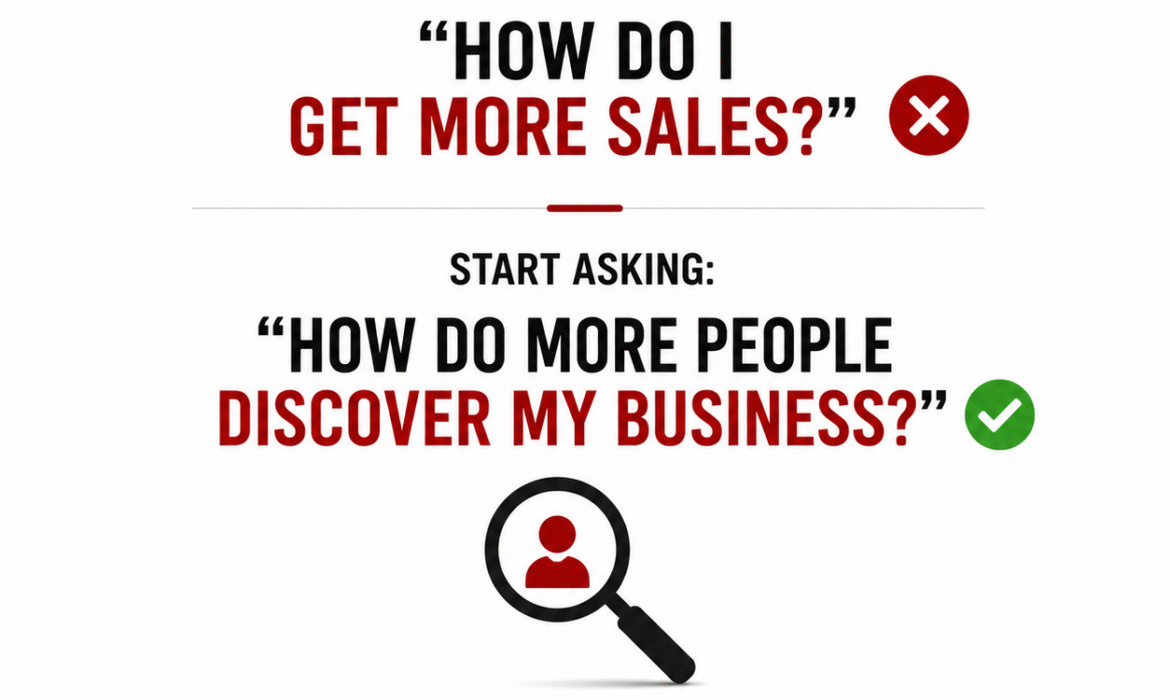
Stop Asking “How Do I Get More Sales?” Start Asking “How Do More People Discover My Business?”
One of the biggest mistakes business owners make is focusing on sales before focusing on visibility.
When growth slows down, the first question most businesses ask is:
“How do I get more sales?”
While sales are important, this question often overlooks the real issue.
In many cases, businesses don’t have a sales problem.
They have a visibility problem.
Because before someone can buy from your business, they first need to know that your business exists.
This is why the most successful companies focus on being discovered before they focus on selling.
The Real Customer Journey
Many business owners think the customer journey starts when someone decides to buy.
In reality, it starts much earlier.
A typical customer journey looks like this:
Step 1: Discovery
A potential customer finds your business through:
- Google Search
- Social Media
- Recommendations
- Online Reviews
- Local Listings
If people cannot find your business, they cannot become your customers.
Step 2: Trust
After discovering your business, customers evaluate your credibility.
They ask questions like:
- Can I trust this company?
- Are they reliable?
- Do they have positive reviews?
- Are they experienced?
Trust is what turns attention into opportunity.
Step 3: Consideration
At this stage, customers compare you with competitors.
They review:
- Pricing
- Reputation
- Services
- Customer feedback
- Brand presence
Businesses that consistently show up online have a significant advantage during this phase.
Step 4: Purchase
Only after discovery, trust, and consideration does a customer decide to buy.
Sales happen at the end of the journey—not the beginning.
Why Visibility Matters More Than Ever
Today’s customers are more informed than ever before.
Before making a purchase decision, they research businesses online.
Studies consistently show that consumers search for information before contacting a company.
This means visibility directly impacts your ability to attract customers.
If your business is not visible online, competitors who are easier to find will capture those opportunities.
The market rewards businesses that stay visible.
Visibility Creates Trust
Visibility is not just about being seen.
It is also about building credibility.
When customers repeatedly see your business:
✔ On Google
✔ On Social Media
✔ Through valuable content
✔ In customer reviews
✔ Across multiple platforms
They begin to trust your brand.
Familiarity creates confidence.
Confidence creates trust.
And trust creates customers.
The Visibility Formula
A simple business growth formula looks like this:
Visibility → Trust → Customers → Growth
Let’s break it down.
Visibility
People discover your business.
↓
Trust
They gain confidence in your expertise.
↓
Customers
They choose your business over competitors.
↓
Growth
More customers lead to increased revenue and expansion.
Businesses often focus on the final result while ignoring the first step.
Signs You Have a Visibility Problem
Many businesses believe they need better sales techniques when the actual issue is visibility.
Common signs include:
❌ Low website traffic
❌ Few inquiries
❌ Limited social media engagement
❌ Low brand awareness
❌ Poor Google visibility
❌ Lack of customer reviews
If customers are not finding your business, improving sales tactics alone may not solve the problem.
How to Increase Business Visibility
Build a Strong Online Presence
Customers expect businesses to have a professional digital presence.
This includes:
- Website
- Social media profiles
- Google Business Profile
- Online directories
A strong online presence increases discoverability.
Invest in Content Marketing
Content helps businesses educate, engage, and attract potential customers.
Examples include:
- Blogs
- Videos
- Social media posts
- Case studies
- Industry insights
Valuable content increases visibility and authority.
Focus on SEO
Search Engine Optimization (SEO) helps businesses appear in search results when potential customers are actively looking for solutions.
SEO is one of the most effective long-term visibility strategies.
Encourage Reviews
Customer reviews improve credibility and help businesses rank higher in local search results.
Reviews are often one of the strongest trust signals for new customers.
Stay Consistent
Visibility is not built overnight.
Businesses that consistently show up are more likely to stay top of mind.
Consistency builds recognition.
Recognition builds trust.
Trust builds growth.
Why Sales Are a Result, Not a Strategy
Many businesses treat sales as the primary objective.
But sales are usually the result of several factors working together.
Customers buy because:
- They discovered your business.
- They trusted your business.
- They understood your value.
- They felt confident making a purchase.
Without visibility, these steps never happen.
That’s why focusing solely on sales can be misleading.
The businesses that generate the most sales are often the businesses that have already mastered visibility.
The Most Important Question to Ask
Instead of asking:
“How do I get more sales?”
Start asking:
“How do more people discover my business?”
This shift in mindset changes everything.
Because when more people discover your business:
✔ More people learn about your brand.
✔ More people trust your expertise.
✔ More people become leads.
✔ More people become customers.
Sales become a natural outcome of visibility.
Business growth does not start with selling.
It starts with being found.
The companies that consistently grow understand that visibility is the foundation of every successful marketing strategy.
Before customers buy from you, they must:
🔍 Find you
🤝 Trust you
👥 Choose you
Only then do they become paying customers.
Remember:
Visibility creates trust.
Trust creates customers.
Customers create growth.
And that is why the smartest businesses focus on visibility before they focus on sales.
Conclusion
If your business is struggling to grow, don’t just ask how to increase sales.
Ask how to increase visibility.
Because the businesses that are easiest to find are often the businesses that grow the fastest.
In today’s digital world, visibility isn’t just marketing.
It’s a growth strategy.
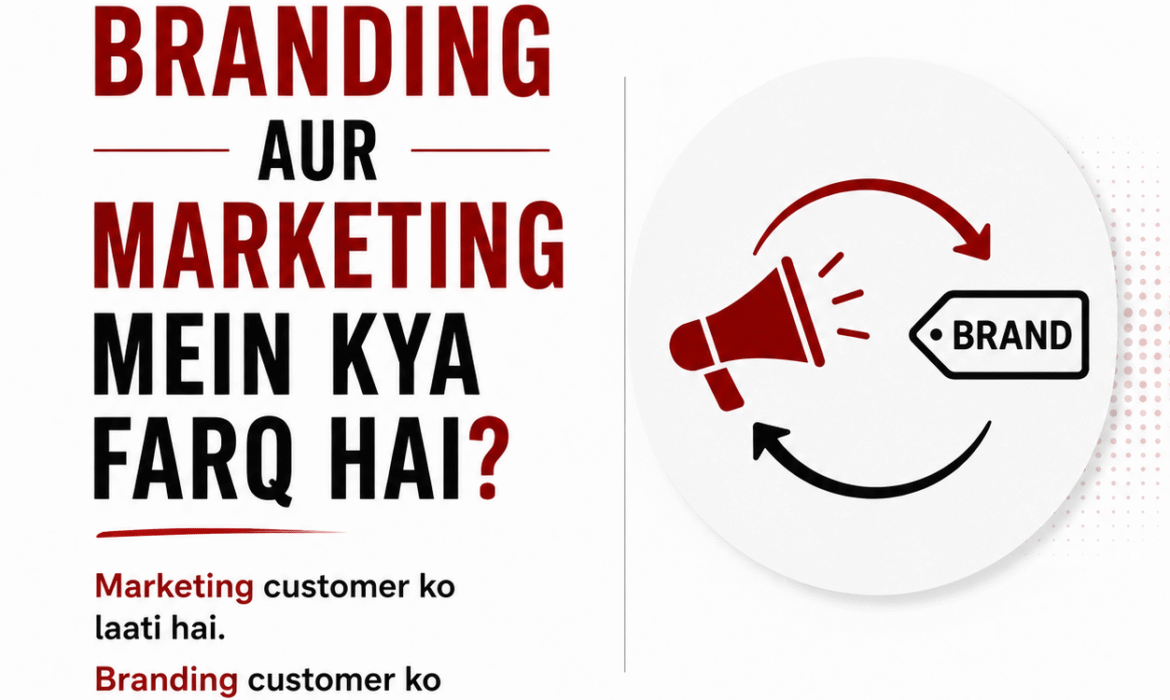
Branding vs Marketing: Why Your Business Needs Both
One of the most common misconceptions in business is that branding and marketing are the same thing.
Many business owners use these terms interchangeably, but they actually serve very different purposes.
Understanding the difference between branding and marketing can help businesses attract more customers, build stronger relationships, and achieve sustainable growth.
A simple way to remember it is:
Marketing brings customers to your business.
Branding brings customers back.
Both are essential, but they play different roles in your business growth journey.
What Is Marketing?
Marketing is the process of promoting your business, products, or services to attract potential customers.
The primary goal of marketing is visibility.
Marketing helps people discover your business and encourages them to take action.
Examples of marketing include:
- Social media campaigns
- Google Ads
- SEO
- Email marketing
- Content marketing
- Influencer marketing
- Video advertising
Marketing answers the question:
“How do people find us?”
Without marketing, even the best products and services can remain unnoticed.
The Main Purpose of Marketing
Marketing focuses on:
📢 Generating awareness
📈 Increasing visibility
🎯 Attracting leads
💬 Driving engagement
🛒 Creating sales opportunities
Marketing is responsible for getting your business in front of the right audience.
Think of marketing as the invitation that encourages customers to discover your brand.
What Is Branding?
Branding is the perception people have about your business.
It is much more than a logo, color palette, or slogan.
Branding includes:
- Customer experience
- Brand values
- Company reputation
- Communication style
- Trust and credibility
- Emotional connection
Branding answers the question:
“What do people think about us?”
Every interaction customers have with your business contributes to your brand.
The Main Purpose of Branding
Branding focuses on:
❤️ Building trust
🤝 Creating emotional connections
⭐ Developing credibility
🔄 Encouraging repeat purchases
🏆 Building customer loyalty
Strong branding makes customers choose your business repeatedly, even when competitors offer similar products or services.
Marketing Gets Attention. Branding Builds Trust.
This is where many businesses get confused.
Marketing may attract a customer for the first time.
But branding determines whether that customer returns.
Imagine two businesses selling similar products.
Business A runs excellent advertisements and attracts lots of new customers.
Business B also attracts customers but focuses heavily on customer experience, trust, and consistency.
Over time, Business B develops a stronger brand and gains loyal customers who keep returning.
This demonstrates the relationship between marketing and branding.
Marketing creates attention.
Branding creates loyalty.
A Simple Coffee Shop Example
Imagine two coffee shops in the same neighborhood.
Both serve similar coffee at similar prices.
One shop invests heavily in promotions and advertisements.
The other focuses on creating a memorable customer experience, maintaining quality, and building relationships.
After a few months, customers begin returning to the second shop more often.
Why?
Not because of the coffee alone.
Because of the brand experience.
People remember how a business makes them feel.
That feeling becomes part of the brand.
Why Businesses Need Both
Some businesses focus only on marketing.
Others focus only on branding.
The most successful companies invest in both.
Without Marketing
People may never discover your business.
Without Branding
Customers may never return.
The strongest businesses combine visibility with trust.
This creates a sustainable growth cycle.
The Formula for Sustainable Growth
A successful business often follows this formula:
Marketing → Visibility
↓
Visibility → Trust
↓
Trust → Loyalty
↓
Loyalty → Growth
Marketing starts the relationship.
Branding strengthens it.
Together, they create long-term success.
The Cost of Ignoring Branding
Many businesses generate leads successfully but struggle to retain customers.
This often happens because they focus entirely on marketing while neglecting branding.
Common signs include:
❌ High customer acquisition costs
❌ Low customer retention
❌ Weak brand recognition
❌ Poor customer loyalty
❌ Inconsistent customer experience
Without strong branding, businesses constantly need new customers just to maintain growth.
The Cost of Ignoring Marketing
On the other hand, some businesses have excellent products and strong customer loyalty but fail to attract new customers.
This happens when marketing is neglected.
Common signs include:
❌ Low visibility
❌ Limited reach
❌ Few leads
❌ Slow business growth
❌ Weak online presence
Without marketing, even great brands struggle to expand.
How Branding and Marketing Work Together
The most successful businesses understand that branding and marketing are partners, not competitors.
Marketing helps people discover your business.
Branding gives them a reason to stay.
Marketing creates awareness.
Branding creates preference.
Marketing generates leads.
Branding generates loyalty.
Marketing drives short-term results.
Branding drives long-term value.
Building a Strong Brand in the Digital Age
Today’s customers interact with brands across multiple platforms.
Your branding should remain consistent across:
- Website
- Social media
- Google Business Profile
- Email communication
- Customer service
- Advertising campaigns
Consistency builds familiarity.
Familiarity builds trust.
Trust builds loyalty.
If you want sustainable business growth, you need both branding and marketing.
Marketing helps customers find you.
Branding gives them a reason to remember you.
The businesses that grow fastest are not always the ones spending the most on advertising.
They are often the businesses that combine strong visibility with strong customer trust.
Remember:
📢 Marketing Gets You Noticed.
❤️ Branding Gets You Remembered.
And long-term business success requires both.
Conclusion
Businesses that invest in both branding and marketing create stronger customer relationships, higher loyalty, better retention, and sustainable growth.
Because attracting customers is important.
But keeping them is where real business success begins.
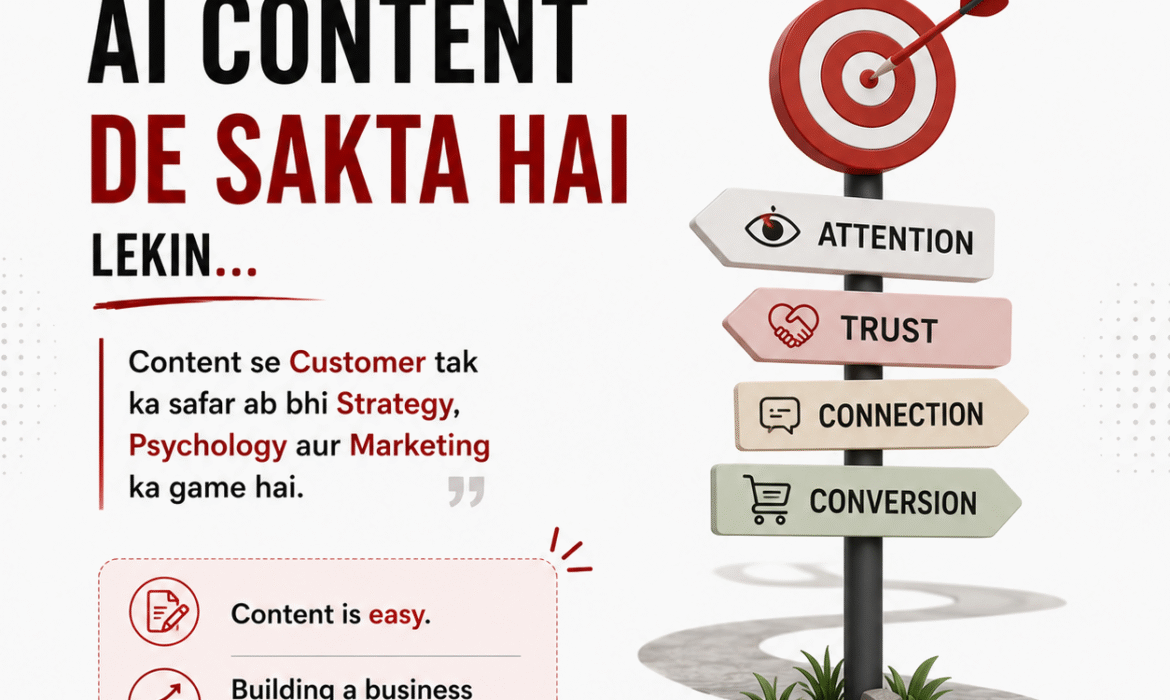
ChatGPT Can Create Content, But Can It Create Customers?
Artificial Intelligence has completely transformed the way businesses create content.
Today, tools like ChatGPT can generate:
✔ Social media posts
✔ Blog articles
✔ Email campaigns
✔ Ad copy
✔ Content ideas
Within seconds.
Tasks that once took hours can now be completed in minutes.
But despite these advancements, many businesses are discovering an important truth:
Content creation has become easier. Customer acquisition has not.
The real challenge has never been creating content.
The real challenge is turning that content into attention, trust, and ultimately, paying customers.
The Rise of AI-Powered Content
AI has democratized content creation.
Whether you’re a startup, freelancer, business owner, or large corporation, you now have access to tools capable of producing content at scale.
This has created an environment where almost everyone can publish content consistently.
But if everyone can create content, then content alone is no longer a competitive advantage.
The question has shifted from:
“Can you create content?”
To:
“Can your content influence buying decisions?”
Content Is Easy. Attention Is Hard.
Every day, millions of pieces of content are published online.
Businesses compete for visibility across:
- Google Search
- YouTube
- TikTok
Consumers are exposed to thousands of marketing messages daily.
As a result, attention has become one of the most valuable assets in modern business.
Creating content is simple.
Capturing attention is difficult.
Without attention, even the best content remains invisible.
Attention Alone Is Not Enough
Many businesses celebrate views, likes, and impressions.
But visibility alone doesn’t guarantee results.
Once people discover your content, they ask themselves:
- Can I trust this business?
- Is this company credible?
- Do they understand my problem?
- Can they deliver results?
This is where trust becomes essential.
Trust is built through:
✔ Consistency
✔ Expertise
✔ Social proof
✔ Valuable content
✔ Customer experiences
Trust cannot be automated.
It must be earned over time.
Why Trust Drives Business Growth
People rarely purchase after seeing a single piece of content.
Instead, they go through a decision-making journey.
They:
🔍 Research
📱 Follow your content
⭐ Read reviews
💬 Compare alternatives
🤝 Build confidence
Only then do they become customers.
Businesses that focus only on creating content often ignore this critical stage.
The strongest brands understand that trust is the bridge between visibility and sales.
The Missing Link: Marketing
Many people confuse content creation with marketing.
They are not the same thing.
Content is only one part of the marketing process.
True marketing includes:
Attention
Getting discovered by the right audience.
Positioning
Showing why your business is different.
Communication
Delivering the right message.
Trust Building
Creating credibility and authority.
Conversion
Turning prospects into customers.
Content supports these activities.
It does not replace them.
Understanding the Customer Journey
A successful customer journey often looks like this:
Step 1: Content
The customer discovers your business.
↓
Step 2: Attention
Your message captures interest.
↓
Step 3: Trust
Your expertise builds confidence.
↓
Step 4: Connection
The customer relates to your brand.
↓
Step 5: Conversion
The customer takes action.
This journey cannot be completed by content alone.
It requires strategy.
Why Strategy Matters More Than Ever
AI tools are available to everyone.
Your competitors have access to the same technology.
So what creates the difference?
The answer is strategy.
Strategy determines:
- Who you’re targeting
- What message you communicate
- How you position your brand
- Where you distribute content
- How you convert attention into revenue
Without strategy, content becomes noise.
With strategy, content becomes a growth engine.
The Future of Marketing in the AI Era
AI is not replacing marketing.
It is changing how marketing is executed.
Businesses that succeed will not be those creating the most content.
They will be the ones that:
✔ Understand their audience
✔ Build trust consistently
✔ Develop strong brand positioning
✔ Create meaningful customer experiences
✔ Use AI strategically
Technology can accelerate growth.
But strategy still determines direction.
Content vs Marketing: Understanding the Difference
Many businesses make this mistake:
Content = Marketing
In reality:
Content is a tool.
Marketing is the system.
Content attracts attention.
Marketing creates customers.
Content generates awareness.
Marketing drives business growth.
Understanding this difference can completely transform how businesses approach growth.
ChatGPT can create content in seconds.
But content alone doesn’t generate customers.
Before a customer buys from you, they must:
👀 Notice you
🤝 Trust you
💬 Connect with your message
🛒 Feel confident enough to take action
This process requires more than content.
It requires strategy, psychology, communication, and marketing.
Because at the end of the day:
Content is easy.
Building a business is not.
And that’s what makes real marketing valuable.
Conclusion
AI is one of the most powerful tools businesses have ever had access to.
But the businesses that win will not be the ones using AI to create the most content.
They will be the ones using AI alongside strategy, branding, trust-building, and customer-focused marketing.
Because content starts the conversation.
Marketing turns that conversation into customers.
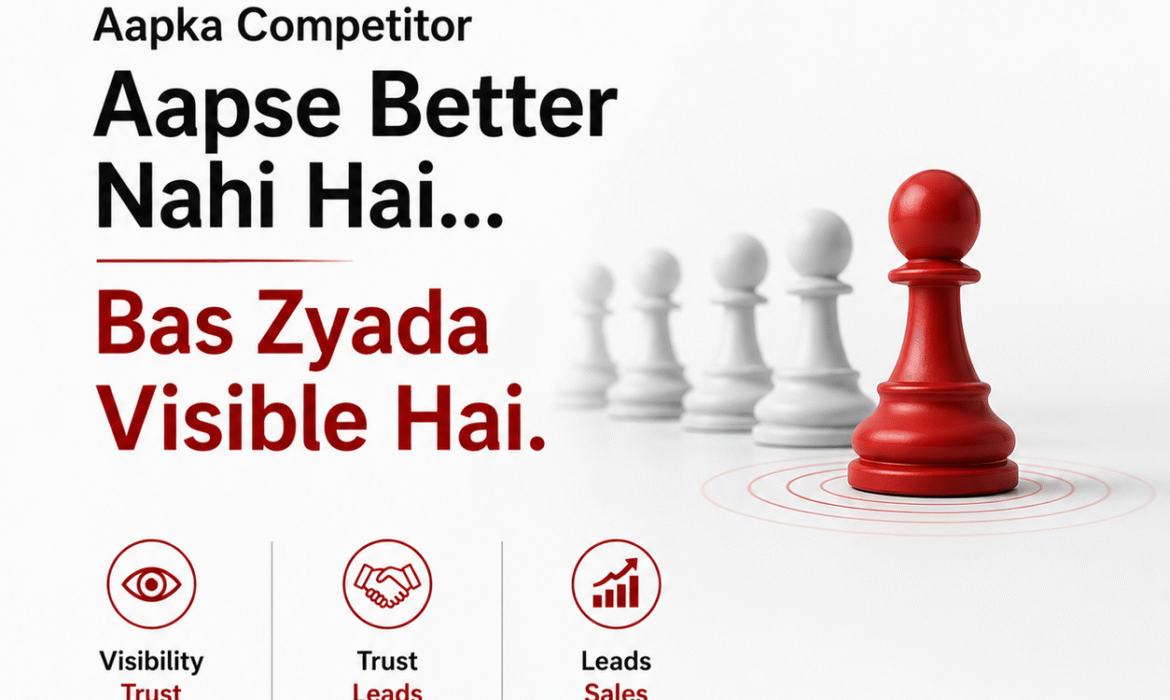
Your Competitor Isn’t Better Than You. They’re Just More Visible.
Many business owners believe their competitors are winning because they have better products, bigger budgets, or superior services.
But in reality, that’s not always the case.
Often, the biggest difference between a growing business and a struggling one is simply visibility.
The businesses that customers see first are usually the businesses they trust first.
And the businesses they trust first are often the businesses they buy from.
In today’s digital-first world, visibility is no longer optional—it’s a competitive advantage.
The Reality of Modern Customer Behavior
Think about your own buying habits.
Before purchasing a product or hiring a service, what do you do?
Most people:
🔍 Search on Google
⭐ Read reviews
📱 Check social media profiles
🌐 Compare different businesses
💬 Ask for recommendations
Only after gathering enough information do they make a decision.
This means your customers are researching long before they contact you.
If your business is not visible during this process, you may never get the opportunity to earn their trust.
Visibility Creates Trust
One of the biggest reasons visibility matters is because it creates familiarity.
People naturally trust businesses they see repeatedly.
When customers regularly find your business:
- On Google
- On social media
- In local search results
- Through valuable content
They begin to recognize your brand.
And recognition creates trust.
Trust is one of the most important factors in purchasing decisions.
Customers are far more likely to buy from a business they know than from one they have never heard of.
The Visibility Formula
Business growth often follows a simple formula:
Visibility → Trust → Leads → Sales
Let’s break it down.
1. Visibility
People discover your business through digital channels such as:
- Search engines
- Social media
- Google Business Profile
- Blogs
- Videos
- Online directories
The more visible you are, the more opportunities you create.
2. Trust
Once people find your business, they evaluate your credibility.
They look at:
- Reviews
- Content quality
- Website professionalism
- Social proof
- Industry expertise
Consistent visibility helps establish authority and trust.
3. Leads
When customers trust your business, they are more likely to:
- Send inquiries
- Call your business
- Fill out contact forms
- Request quotes
Trust converts attention into leads.
4. Sales
Quality leads eventually become paying customers.
This is where visibility translates directly into revenue growth.
Why Great Businesses Still Struggle
Many businesses offer outstanding products and services.
Yet they continue to struggle with growth.
Why?
Because quality alone is not enough.
Customers cannot buy from a business they cannot find.
A hidden business loses opportunities every day to competitors who are more visible online.
The market does not always reward the best business.
It often rewards the most visible business.
How Businesses Can Improve Visibility
Strengthen Your Google Presence
A well-optimized Google Business Profile helps customers discover your business through local searches.
It also builds trust through reviews, photos, and business information.
Create Consistent Content
Content helps businesses stay visible and relevant.
Examples include:
- Educational posts
- Industry insights
- Case studies
- Customer success stories
- Videos and reels
Consistent content keeps your brand in front of potential customers.
Invest in SEO
Search Engine Optimization (SEO) improves your ability to appear in search results when customers are actively looking for solutions.
SEO helps generate long-term organic visibility.
Build a Strong Brand
Branding is more than a logo.
It includes:
- Messaging
- Design consistency
- Customer experience
- Market positioning
Strong brands are easier to remember and trust.
Visibility Is the New Competitive Advantage
In today’s digital economy, businesses compete for attention before they compete for sales.
The companies that win are often those that:
✔ Show up consistently
✔ Build trust over time
✔ Create valuable content
✔ Stay visible where customers are searching
Visibility is no longer a marketing metric.
It is a business growth strategy.
If your business isn’t growing as quickly as you’d like, don’t immediately assume your product or service is the problem.
Ask yourself:
Can my customers find me easily online?
Because in many cases:
Your competitor isn’t better than you.
They are simply more visible.
And in today’s market:
📍 Visibility creates Trust
📍 Trust creates Leads
📍 Leads create Sales
📍 Sales create Growth
The businesses that focus on building a strong online presence today will be the businesses that dominate their industries tomorrow.
Conclusion
Success is not always about being the best.
It’s about being visible enough for customers to discover, trust, and choose your business.
In a crowded marketplace, visibility is often the difference between being ignored and becoming the first choice. 🚀

AI Can Create Content, But It Can’t Create Customers
Artificial Intelligence has become one of the most talked-about technologies in the business world.
From content creation and design generation to data analysis and automation, AI is changing the way businesses operate. Companies across industries are adopting AI tools to improve efficiency, reduce manual work, and accelerate growth.
But amidst all the excitement, one question continues to emerge:
Can AI replace marketing agencies and business strategists?
The answer is simple:
No.
AI is a powerful tool, but it is not a replacement for strategy, creativity, customer understanding, and business decision-making.
The Rise of AI in Marketing
Today, AI can perform tasks that once required hours of manual effort.
AI tools can:
- Write blog posts
- Generate social media captions
- Create marketing ideas
- Analyze large datasets
- Automate repetitive workflows
- Generate images and designs
- Improve productivity
There is no doubt that AI has made marketing faster and more efficient.
Businesses that embrace AI can save time, reduce operational costs, and streamline many processes.
However, speed alone does not guarantee success.
Content Is Easy. Customers Are Not.
One of the biggest misconceptions about AI is that creating content automatically leads to business growth.
The reality is very different.
AI can create thousands of pieces of content.
But content alone does not generate customers.
Successful marketing requires:
- Understanding customer behavior
- Building trust
- Creating brand positioning
- Solving real problems
- Delivering the right message
- Choosing the right channels
- Developing long-term strategies
These are areas where human expertise still plays the most important role.
If Everyone Has AI, What Creates the Difference?
Today, almost every business has access to AI tools.
If everyone is using the same technology, then what separates successful businesses from struggling ones?
The answer is:
Strategy
A tool can provide information.
A strategist provides direction.
Branding
AI can generate logos and content.
But building a memorable brand requires deep understanding of customer psychology.
Positioning
Knowing how to differentiate your business from competitors requires market expertise and strategic thinking.
Execution
Even the best ideas fail without proper implementation.
Execution remains one of the biggest competitive advantages in business.
AI Is a Tool, Not a Decision Maker
Think of AI as a highly skilled assistant.
It can help with:
✔ Research
✔ Content creation
✔ Data processing
✔ Automation
✔ Productivity
But AI cannot independently determine:
- Business goals
- Brand identity
- Market positioning
- Customer emotions
- Long-term vision
Businesses still need human leaders to make strategic decisions.
Technology supports growth.
People create growth.
The Winning Formula: AI + Human Strategy
The future does not belong to businesses that reject AI.
Nor does it belong to businesses that depend entirely on AI.
The future belongs to businesses that successfully combine technology with human expertise.
AI Provides:
- Speed
- Efficiency
- Automation
- Data insights
Humans Provide:
- Creativity
- Emotional intelligence
- Strategic thinking
- Innovation
- Decision-making
When these two forces work together, businesses achieve stronger and more sustainable growth.
Why Marketing Agencies Still Matter
Some people believe AI will eliminate marketing agencies.
In reality, AI is more likely to eliminate average marketing practices rather than professional marketing expertise.
Modern agencies do much more than create content.
They help businesses:
- Build marketing strategies
- Generate leads
- Improve conversions
- Strengthen brand positioning
- Analyze customer behavior
- Optimize campaigns
- Scale growth
AI supports these activities.
It does not replace them.
The businesses that achieve the best results will be those that combine AI-powered efficiency with experienced strategic guidance.
How Businesses Should Use AI
Instead of fearing AI or relying entirely on it, businesses should use it strategically.
Best practices include:
Use AI for Productivity
Allow AI to handle repetitive and time-consuming tasks.
Focus Human Effort on Strategy
Invest time in understanding customers, market trends, and business goals.
Combine Data with Experience
AI can provide insights, but human expertise is needed to interpret them effectively.
Prioritize Customer Relationships
People buy from brands they trust.
Trust is built through authentic communication and human connection.
The Future of Marketing
Marketing is evolving rapidly.
AI will continue to become more advanced.
Automation will become more common.
Content creation will become easier.
But one thing will remain unchanged:
Businesses that understand their customers better than their competitors will always win.
Technology can enhance marketing.
Strategy makes marketing successful.
Artificial Intelligence is one of the most powerful business tools ever created.
It is helping businesses work faster, smarter, and more efficiently.
However, AI cannot replace the human elements that drive real business success:
- Strategy
- Creativity
- Branding
- Positioning
- Customer understanding
Remember:
AI creates content.
Strategy creates customers.
The businesses that combine AI with strong marketing expertise will be the ones that dominate the future.
Conclusion
At ASI Solutions, we believe AI is a powerful partner in business growth—but true success comes from combining technology with strategic thinking.
Because while AI can create content in seconds, building trust, attracting customers, and growing a brand still requires a clear strategy and human expertise.
AI gives speed. Strategy gives direction. Together, they create growth.
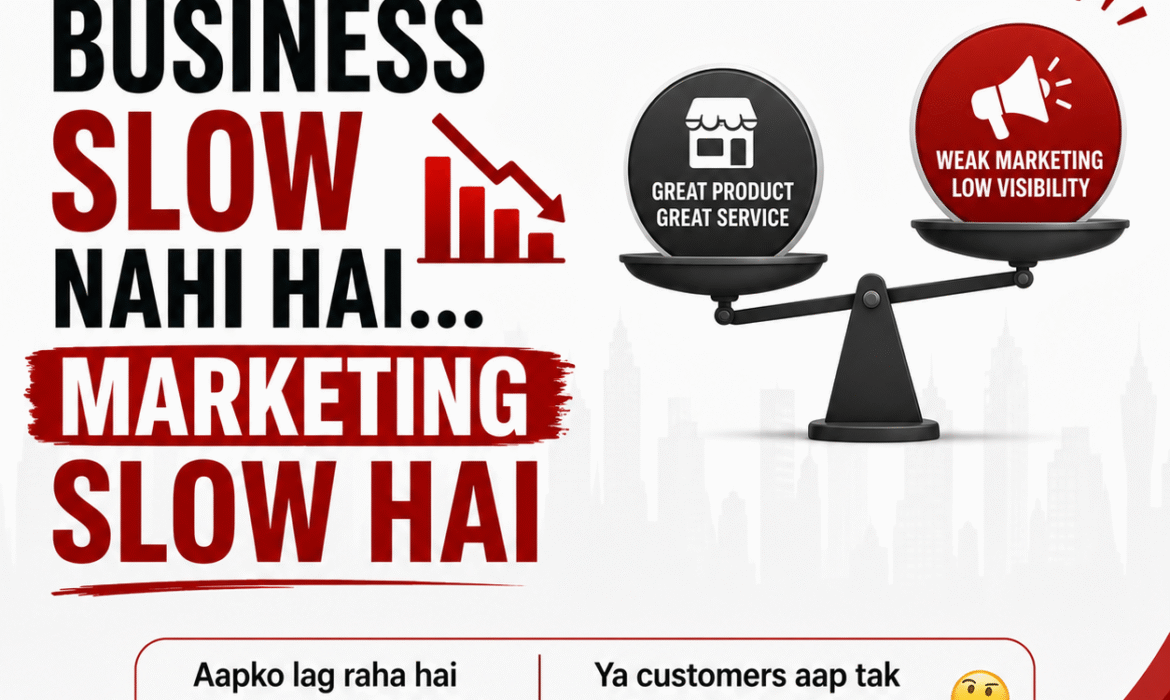
Your Business Isn’t Slow, Your Marketing Is
Many business owners believe that declining sales, fewer inquiries, or slower growth are signs of a weak market.
You’ll often hear statements like:
- “Business is slow.”
- “Customers aren’t spending.”
- “The market isn’t good right now.”
But in many cases, the real problem isn’t the business.
The real problem is marketing.
A great product or service alone is no longer enough to attract customers. In today’s digital world, businesses need visibility, trust, and a strong online presence to succeed.
If potential customers cannot find you, they cannot buy from you.
Customer Behavior Has Changed
The way people make buying decisions has changed dramatically.
Before contacting a business, customers usually:
🔍 Search on Google
⭐ Read online reviews
📱 Visit social media profiles
🌐 Compare multiple businesses
💬 Ask for recommendations
Only after completing this research do they decide whom to trust.
This means your business is being evaluated long before a customer contacts you.
Visibility Creates Opportunity
Imagine two businesses offering similar products and services.
Business A:
- Active on social media
- Visible on Google
- Has positive reviews
- Consistently shares valuable content
Business B:
- Rarely posts online
- Has little digital presence
- Few reviews
- Minimal branding
Which business is more likely to attract customers?
Most people will choose Business A.
Not necessarily because it’s better.
But because it’s more visible.
Visibility creates familiarity.
Familiarity creates trust.
Trust drives sales.
The Hidden Cost of Poor Marketing
Poor marketing doesn’t just reduce sales.
It creates a chain reaction that affects the entire business.
Low Visibility
Potential customers don’t know your business exists.
Weak Brand Recognition
People forget your brand because they rarely see it.
Fewer Leads
Without visibility, inquiries decrease.
Reduced Customer Trust
Customers trust businesses they see consistently.
Lost Market Share
Competitors gain the customers you fail to reach.
The cost of poor marketing is often much higher than business owners realize.
Why Good Businesses Still Struggle
Many business owners assume that a great product will automatically attract customers.
Unfortunately, that’s no longer true.
Even excellent businesses can struggle if they:
❌ Ignore social media
❌ Neglect SEO
❌ Fail to build their brand
❌ Don’t generate consistent content
❌ Lack a lead generation strategy
The market rewards businesses that communicate effectively.
Not just businesses that offer great products.
The Four Pillars of Modern Business Growth
1. Visibility
Customers must be able to find your business.
This includes:
- Google Search
- Google Business Profile
- Social Media Platforms
- Local SEO
The more visible you are, the more opportunities you create.
2. Branding
Branding is more than a logo.
It’s how people perceive your business.
Strong branding helps customers:
- Remember you
- Trust you
- Recommend you
A recognizable brand often outperforms competitors even when products are similar.
3. Content Marketing
Content educates, informs, and builds authority.
Businesses that consistently publish valuable content:
✔ Build trust faster
✔ Generate more engagement
✔ Attract higher-quality leads
✔ Improve online visibility
Content marketing is one of the most powerful long-term growth strategies available today.
4. Lead Generation
Without a system for generating leads, growth becomes unpredictable.
Businesses should focus on:
- Website inquiries
- Social media leads
- Google Business Profile leads
- Email marketing
- Paid advertising
Consistent lead generation creates predictable growth.
Marketing Is an Investment, Not an Expense
One of the biggest mistakes businesses make is viewing marketing as a cost.
In reality, marketing is an investment in future growth.
Effective marketing helps businesses:
📈 Increase sales
📈 Build customer loyalty
📈 Improve visibility
📈 Strengthen brand value
📈 Generate long-term revenue
The businesses that invest in marketing today often become the market leaders tomorrow.
How to Know If Marketing Is Your Problem
Ask yourself:
- Are people finding your business online?
- Do you receive consistent inquiries?
- Are you visible on Google?
- Do you post valuable content regularly?
- Are customers engaging with your brand?
- Do you have a lead generation system?
If the answer to most of these questions is “No,” your challenge may not be the business itself.
It may be your marketing.
Many businesses don’t have a product problem.
They don’t have a service problem.
They have a visibility problem.
In today’s competitive market, the businesses that grow are the ones that stay visible, build trust, and communicate consistently.
Remember:
📍 Visibility Creates Trust
📍 Trust Creates Leads
📍 Leads Create Sales
📍 Sales Create Growth
So before saying, “My business is slow,” ask yourself a more important question:
“Is my marketing helping customers find me?”
Conclusion
At ASI Solutions, we help businesses improve their digital presence through strategic marketing, branding, content creation, lead generation, SEO, and social media management.
Because successful businesses aren’t always the best-known businesses.
They’re the businesses that make sure the right people can find them at the right time. 🚀
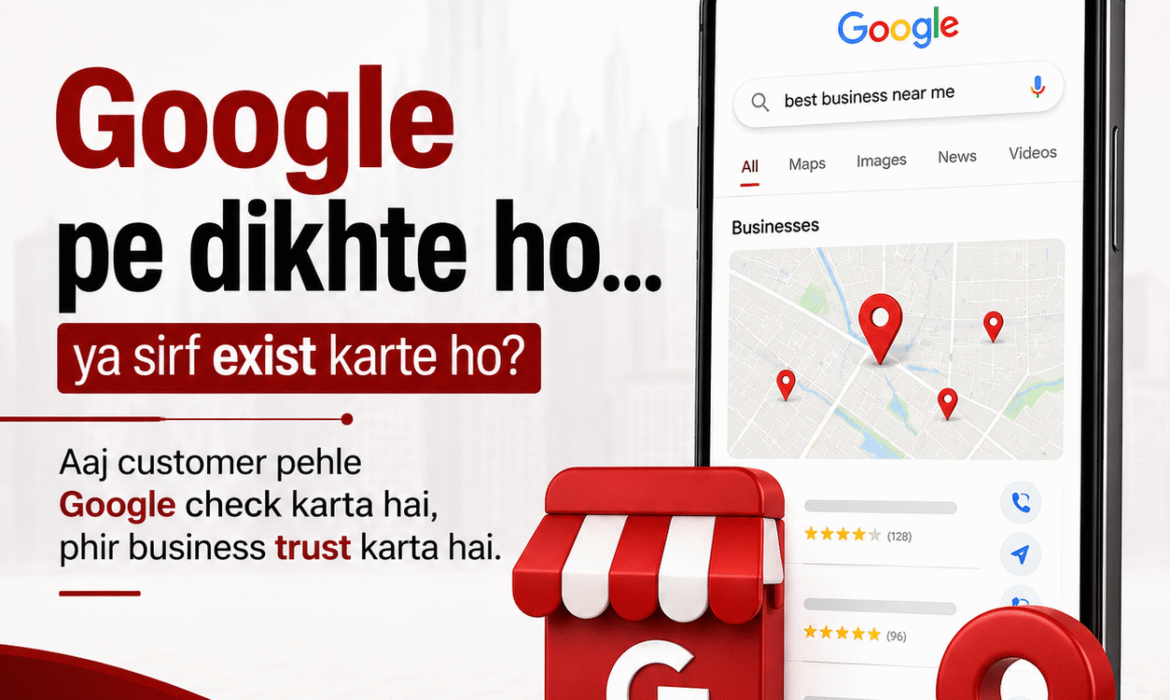
Why Google My Business Is Important for Every Local Business
In today’s digital world, customers search online before visiting any business offline.
Whether someone wants:
- A salon
- Coaching institute
- Cafe
- Clinic
- Restaurant
- Gym
- Marketing agency
…the first thing they usually do is search on Google.
And the businesses that appear at the top often get the most attention, trust, and customers.
This is where Google My Business (Google Business Profile) becomes extremely important.
If your business is not properly visible on Google, you are likely losing potential customers to competitors every single day.
What Is Google My Business?
Google My Business (GMB), now known as Google Business Profile, is a free tool provided by Google that allows businesses to appear on:
- Google Search
- Google Maps
- Local search results
It helps customers find important information about your business such as:
✔ Business name
✔ Address
✔ Phone number
✔ Website
✔ Photos
✔ Reviews
✔ Opening hours
✔ Services
A properly optimized profile improves your local online visibility and builds customer trust.
Why Google My Business Matters
1. Customers Search on Google First
Modern customers trust Google before trusting businesses.
When people search:
- “Best salon near me”
- “Cafe near me”
- “Coaching institute in Aligarh”
- “Digital marketing agency near me”
Google shows local business profiles first.
If your business profile is optimized, your chances of getting discovered increase significantly.
2. Better Visibility Means More Customers
A strong Google Business Profile helps businesses:
✔ Appear in local searches
✔ Rank on Google Maps
✔ Reach nearby customers
✔ Increase walk-ins and inquiries
The more visible your business becomes online, the higher the chances of customer conversions.
Online visibility directly impacts business growth.
3. Reviews Build Trust
Before contacting a business, customers usually check:
⭐ Ratings
⭐ Customer reviews
⭐ Photos
⭐ Response quality
Positive reviews create trust instantly.
Businesses with strong ratings and active engagement usually attract more customers than businesses with weak or inactive profiles.
This is why review management is one of the most important parts of GMB optimization.
4. Google My Business Improves Local SEO
Google My Business plays a major role in Local SEO (Search Engine Optimization).
An optimized profile helps Google understand:
- What your business does
- Where your business is located
- Which customers should see your business
This increases your chances of appearing in:
✔ “Near me” searches
✔ Google Maps results
✔ Local search rankings
For local businesses, GMB is one of the most powerful SEO tools available.
5. Your Google Profile Becomes Your First Impression
In many cases, customers see your Google profile before:
- Your website
- Your Instagram page
- Your physical shop
That means your Google profile acts like a digital storefront.
A weak profile creates doubt.
A strong profile creates credibility.
Customers judge businesses based on:
✔ Photos
✔ Reviews
✔ Business information
✔ Response speed
✔ Overall professionalism
First impressions matter more than ever in the digital age.
Simply Creating a Profile Is Not Enough
Many businesses make one common mistake:
They create a Google profile and never update it again.
That is not enough.
To stay competitive, businesses should regularly:
📸 Upload fresh photos
📝 Add updates and posts
⭐ Reply to reviews
📍 Keep information accurate
⏰ Update timings
📞 Maintain contact details
Google prefers active and updated profiles.
The more active your profile is, the better your visibility can become.
How Google My Business Helps Business Growth
A properly managed GMB profile can help businesses:
✔ Increase calls and inquiries
✔ Generate local leads
✔ Improve brand trust
✔ Increase customer visits
✔ Improve online reputation
✔ Grow faster than competitors
Businesses that appear stronger online often dominate local markets offline as well.
Your Competitor Is Already Working on It
If your business is not optimized on Google:
❌ Your competitor will appear first
❌ Customers may never discover you
❌ You lose visibility and trust
But businesses with strong Google profiles:
✔ Gain more attention
✔ Build more authority
✔ Get more customers
✔ Grow faster consistently
In today’s market, digital visibility is business power.
Best Practices for Google My Business Optimization
Here are some important GMB optimization tips:
✔ Add Accurate Information
Keep your:
- Address
- Phone number
- Website
- Business category
- Working hours
100% correct and updated.
✔ Upload High-Quality Photos
Good photos improve:
- Trust
- Engagement
- Customer confidence
Businesses with photos usually perform better than profiles without visuals.
✔ Collect Genuine Reviews
Encourage satisfied customers to leave honest reviews.
More positive reviews = stronger trust.
✔ Respond to Reviews
Replying to reviews shows professionalism and customer care.
Even responding politely to negative reviews improves credibility.
✔ Post Regular Updates
Share:
- Offers
- Events
- New services
- Announcements
This keeps your profile active and engaging.
Final Thoughts
Google My Business is no longer optional for local businesses.
It is one of the most powerful tools for:
✔ Local visibility
✔ Customer trust
✔ Lead generation
✔ Business growth
If customers cannot find your business online, they will choose the businesses they can find.
Because today:
👉 Visibility creates trust
👉 Trust creates customers
👉 Customers create business growth
Businesses that invest in their online presence today will dominate tomorrow’s market.
Conclusion
At ASI Solutions, we believe every business deserves strong digital visibility.
From Google Business Profile optimization to digital marketing strategies, building a strong online presence is the key to long-term growth in today’s competitive market. 🚀
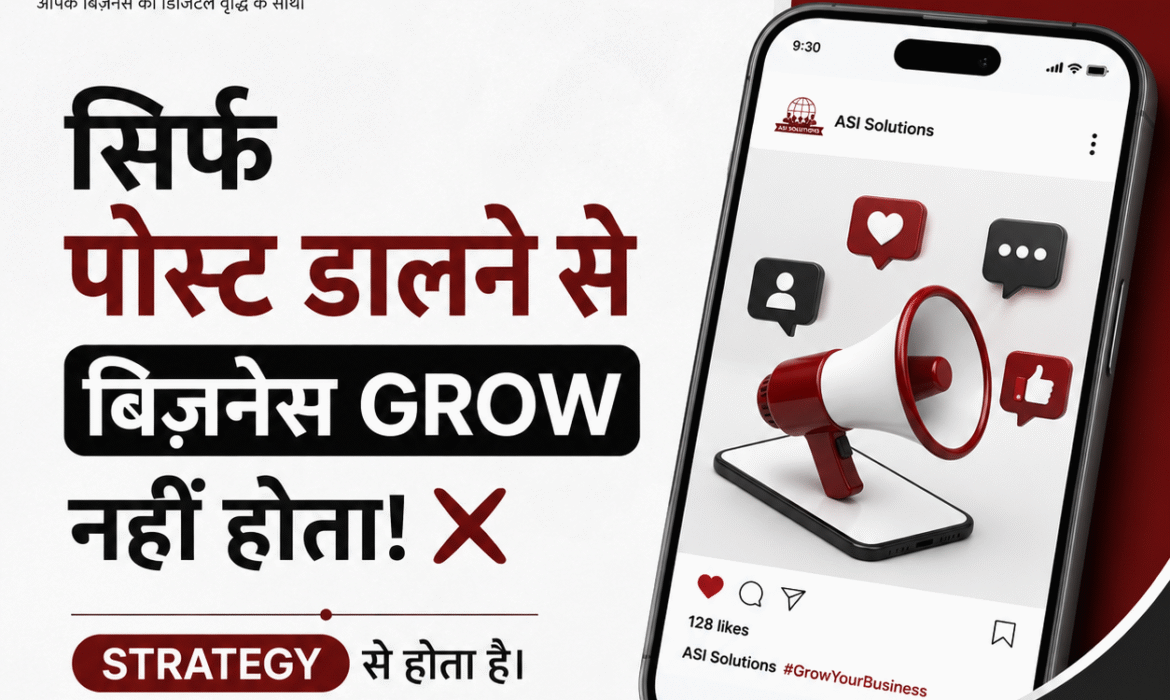
Why Posting Daily Is Not Enough for Business Growth
In today’s digital world, almost every business is active on social media.
Brands are posting reels, uploading stories, sharing graphics, and following trends every single day.
But despite being active online, many businesses still struggle to get:
- Quality leads
- Brand visibility
- Customer trust
- Real sales growth
Why does this happen?
Because social media success is not only about posting content.
👉 It’s about having the right strategy behind the content.
A business can post every day and still fail to grow if its content lacks direction, purpose, and audience understanding.
Social Media Is More Than Just Likes
Many business owners still believe social media success is measured by likes and followers.
But modern digital marketing is much bigger than vanity metrics.
A strong social media presence helps businesses:
✔ Build brand identity
✔ Create customer trust
✔ Generate leads
✔ Increase visibility
✔ Improve customer engagement
✔ Drive long-term sales growth
The real purpose of social media is not entertainment alone — it is business positioning and digital growth.
The Biggest Mistake Businesses Make
One of the most common mistakes businesses make is posting random content without planning.
They:
- Upload random graphics
- Copy trending reels
- Post without understanding their audience
- Ignore branding consistency
- Forget clear call-to-actions
As a result:
❌ Content gets ignored
❌ Engagement drops
❌ Audience loses interest
❌ Leads stop coming
Without strategy, content becomes noise.
What Makes Social Media Content Successful?
Successful content is not accidental.
Every high-performing brand follows a clear content strategy that focuses on customer psychology and business goals.
Strong social media content usually includes:
1. Strong Hooks
The first few seconds or first line decide whether people will stop scrolling or ignore your content.
A powerful hook grabs attention instantly.
Example:
- “Your business is not failing… your strategy is.”
- “Posting daily but still getting no leads?”
Hooks create curiosity and improve engagement.
2. Eye-Catching Visuals
People process visuals much faster than text.
Good design:
✔ Builds professionalism
✔ Increases brand trust
✔ Makes content memorable
✔ Improves audience retention
Weak visuals often make even good content look unprofessional.
3. Clear Messaging
If your audience cannot understand your message quickly, they will move on.
Your content should clearly answer:
- What problem are you solving?
- Why should people care?
- What action should they take?
Simple and direct communication performs best on social media.
4. Proper Call-To-Action (CTA)
Many businesses forget to guide their audience.
Every content piece should encourage users to:
- Send a DM
- Visit your website
- Contact your business
- Save or share the post
- Learn more about your services
Without a CTA, people may consume content but never take action.
Why Strategy Matters More Than Frequency
Posting 3 strategic posts per week is often more effective than posting random content every day.
A proper social media strategy helps businesses:
✔ Understand audience behavior
✔ Create consistent branding
✔ Improve engagement quality
✔ Generate targeted leads
✔ Build long-term trust
The brands growing online today are not always the biggest companies.
They are the brands communicating better and connecting emotionally with their audience.
Branding Creates Trust
Before buying from a business, most customers now check:
- Instagram page
- Facebook presence
- Website
- Reviews
- Content quality
Your social media profile acts like your digital showroom.
If your content looks weak or inconsistent, customers may lose trust instantly.
But a strong and professional online presence creates credibility.
And credibility increases conversions.
The Future of Digital Marketing
The future belongs to businesses that:
✔ Create valuable content
✔ Understand audience psychology
✔ Focus on branding
✔ Use storytelling
✔ Build relationships online
Social media is no longer optional for business growth.
It is one of the most powerful marketing tools available today.
Businesses that ignore strategic content marketing will struggle to compete in the digital era.
Simply posting content every day does not guarantee success.
Real growth happens when content is backed by:
- Strategy
- Branding
- Audience understanding
- Clear messaging
- Consistent execution
If you want your business to grow online, stop posting randomly and start creating content with purpose.
Because:
👉 Visibility builds trust
👉 Trust builds customers
👉 Customers build business growth
Conclusion
At ASI Solutions, we help businesses grow digitally with:
✔ Social Media Management
✔ Branding Strategy
✔ Lead Generation
✔ Content Marketing
✔ Digital Growth Solutions
If your business wants real online growth, focus on strategy — not just posting. 🚀

Why You Should Understand the Market Before Launching Your Product
Launching a product is exciting.
Many entrepreneurs focus on packaging, branding, manufacturing, and social media promotions.
But one of the biggest reasons products fail is simple:
👉 They enter the market without understanding it first.
A successful product launch is not only about having a good idea.
It’s about understanding what people actually want, what problems they face, and how your product can solve them better than others.
Before launching your own product, there’s a smarter approach that many successful businesses follow.
📌 Market First, Product Later
Instead of immediately launching your own product, try marketing similar products already available in the market.
This strategy gives you real-world business experience without taking high initial risks.
By promoting existing products, you can learn:
✔ Customer behavior
✔ Market demand
✔ Buying psychology
✔ Pricing expectations
✔ Marketing techniques
✔ Competitor weaknesses
This process helps you understand whether your future product actually has market potential.
🔍 1. Understand Customer Demand
One of the biggest advantages of marketing similar products is understanding what customers really want.
You’ll discover:
- Which products people are buying
- Which problems customers are trying to solve
- What features attract attention
- What customers complain about
This information becomes extremely valuable when developing your own product.
Because the truth is:
👉 Successful products solve real problems.
📈 2. Learn Marketing Before Launching
Many businesses fail because they create a product first and learn marketing later.
But marketing is what drives visibility, leads, and sales.
When you market similar products before launching your own, you learn:
✔ How advertisements work
✔ Which platforms generate better results
✔ What type of content converts customers
✔ How audiences react to offers and messaging
These practical skills become your biggest advantage later.
⚠️ 3. Discover Competitor Weaknesses
Every market has gaps.
Customers often complain about:
- Poor quality
- High pricing
- Bad customer support
- Lack of trust
- Weak branding
When you study competitor products carefully, you can identify opportunities to improve your own product.
This helps you create a stronger and more customer-focused brand.
🎯 4. Build an Audience Before Launch
Another major benefit of this strategy is audience building.
When you start marketing in a niche, people begin recognizing your brand and content.
Over time:
✔ You gain trust
✔ You build visibility
✔ You understand audience interests
✔ You create a potential customer base
So when your product finally launches,
you already have an audience ready to buy.
💡 5. Launch with Confidence, Not Guesswork
Most failed launches happen because businesses rely on assumptions instead of market understanding.
But when you’ve already:
✔ Studied the market
✔ Learned marketing
✔ Understood customer demand
✔ Identified competitor gaps
…your product launch becomes much more strategic and powerful.
At that point, you’re no longer guessing.
You’re launching with confidence.
🚀 Final Thoughts
Building a product without understanding the market is risky.
Smart entrepreneurs first learn the market, study customer behavior, and gain marketing experience before launching their own brand.
Because successful businesses are not built only on ideas —
they are built on strategy, research, and execution.
So before you launch your next product:
👉 Understand the market first.
👉 Learn what customers actually want.
👉 Then create something that truly delivers value.
📢 Conclusion
If you want long-term business success:
❌ Don’t rush your product launch
✅ Build your market understanding first
At ASI Solutions, we help businesses grow with smart digital marketing, branding, and strategic business solutions.
🚀 Follow us for more insights on business growth, product strategy, and digital marketing.
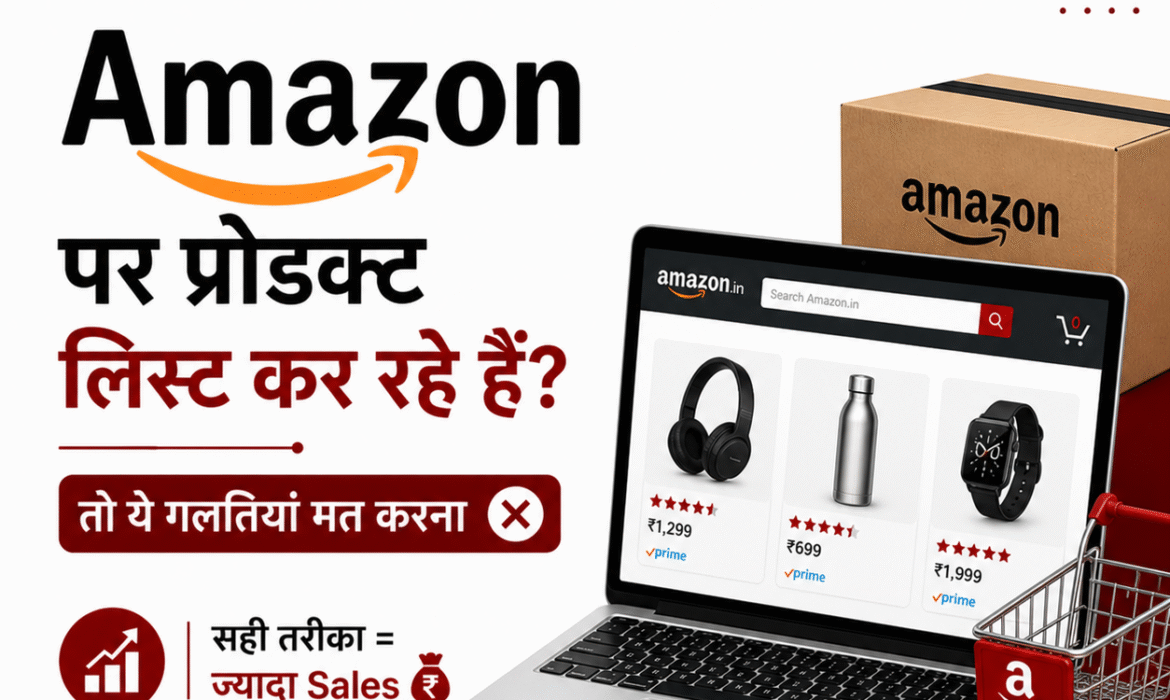
Amazon Product Listing Tips: How to Increase Sales & Profit
Selling on Amazon is one of the biggest opportunities for businesses today.
But simply uploading your product is not enough.
Thousands of sellers list their products every day, yet only a few achieve consistent sales.
Why?
Because success on Amazon depends on strategy, optimization, and presentation.
In this blog, we’ll break down the most important Amazon product listing tips that can help you increase visibility, conversions, and profit.
🔥 1. Optimize Your Product Title with Benefits
Your product title is the first thing customers notice.
Most sellers make a mistake by only mentioning the product name.
But customers are more interested in what benefit they will get.
❌ Example (Wrong):
Steel Bottle
✅ Example (Right):
Steel Bottle – Keeps Water Cold for 12 Hours
👉 A benefit-driven title improves:
- Click-through rate (CTR)
- Visibility in search results
- Customer interest
📌 2. Use FAB Formula in Bullet Points (Feature → Advantage → Benefit)
Bullet points play a major role in influencing buying decisions.
Instead of just listing features, use the FAB formula:
- Feature: What the product has
- Advantage: What it does
- Benefit: How it helps the customer
✅ Example:
- Leak-proof design
- No spills in your bag
- Travel stress-free
👉 This approach makes your listing more persuasive and customer-focused.
📖 3. Write a Detailed Product Description
Many sellers ignore the description section — and lose sales because of it.
A well-written description helps customers:
✔ Understand the product clearly
✔ Build trust
✔ Make confident buying decisions
Include:
- Product usage
- Target audience
- Key benefits
- Unique selling points
👉 The more clarity you provide, the higher your chances of conversion.
💰 4. Focus on Smart Pricing Strategy
Pricing is not about being the cheapest.
It’s about finding the right balance between value and competition.
Smart pricing includes:
- Competitor analysis
- Discounts & offers
- Value-based pricing
👉 Right pricing leads to:
- Higher conversions
- Better profit margins
- Strong market positioning
⚠️ 5. Listing Alone Doesn’t Guarantee Sales
Many sellers believe that once the product is listed, sales will automatically come.
But the truth is:
👉 Amazon listing is your digital salesperson.
If your listing is not optimized:
- Customers won’t click
- They won’t trust
- They won’t buy
🚀 Final Thoughts: Turn Your Listing into a Sales Machine
Amazon is a competitive marketplace.
To stand out, you need more than just a product — you need strategy.
By applying these techniques:
✔ Optimized titles
✔ FAB-based bullet points
✔ Detailed descriptions
✔ Smart pricing
You can significantly increase your sales and profits.
📢 Conclusion
If you want to grow on Amazon or Flipkart:
👉 Don’t just list your product
👉 Position it to sell
💼 At ASI Solutions, we help businesses optimize their product listings and digital presence to drive real growth.
👉 Follow us for more insights on ecommerce, SEO, and digital marketing.

