
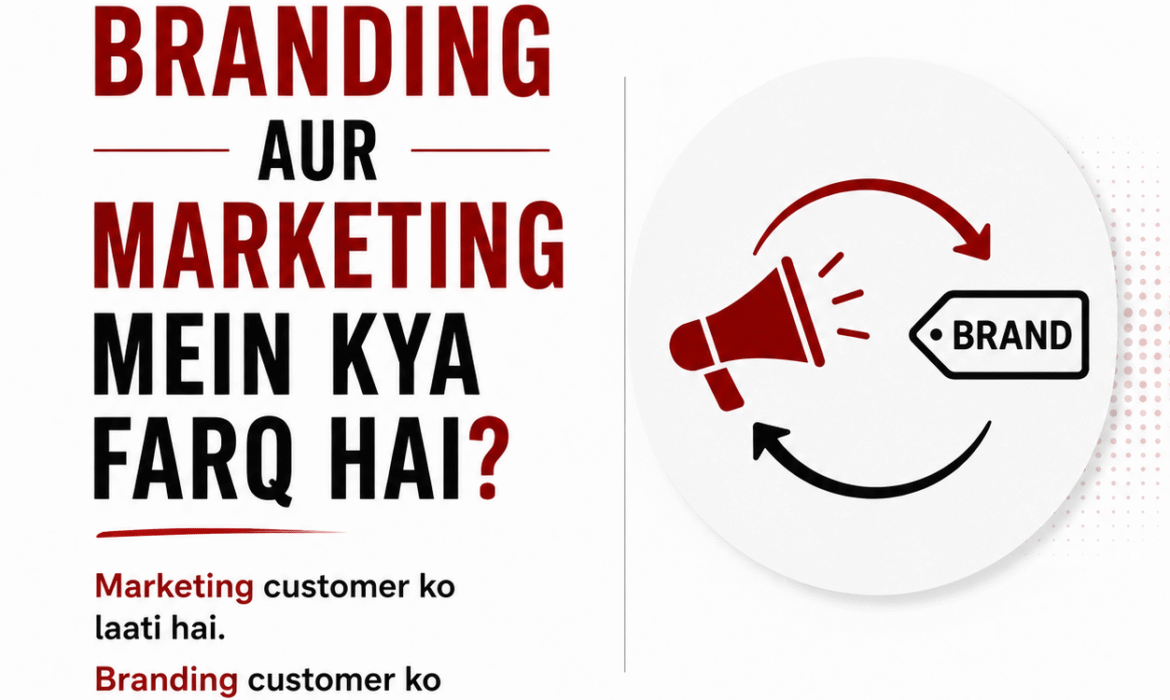
One of the most common misconceptions in business is that branding and marketing are the same thing.
Many business owners use these terms interchangeably, but they actually serve very different purposes.
Understanding the difference between branding and marketing can help businesses attract more customers, build stronger relationships, and achieve sustainable growth.
A simple way to remember it is:
Marketing brings customers to your business.
Branding brings customers back.
Both are essential, but they play different roles in your business growth journey.
What Is Marketing?
Marketing is the process of promoting your business, products, or services to attract potential customers.
The primary goal of marketing is visibility.
Marketing helps people discover your business and encourages them to take action.
Examples of marketing include:
- Social media campaigns
- Google Ads
- SEO
- Email marketing
- Content marketing
- Influencer marketing
- Video advertising
Marketing answers the question:
“How do people find us?”
Without marketing, even the best products and services can remain unnoticed.
The Main Purpose of Marketing
Marketing focuses on:
📢 Generating awareness
📈 Increasing visibility
🎯 Attracting leads
💬 Driving engagement
🛒 Creating sales opportunities
Marketing is responsible for getting your business in front of the right audience.
Think of marketing as the invitation that encourages customers to discover your brand.
What Is Branding?
Branding is the perception people have about your business.
It is much more than a logo, color palette, or slogan.
Branding includes:
- Customer experience
- Brand values
- Company reputation
- Communication style
- Trust and credibility
- Emotional connection
Branding answers the question:
“What do people think about us?”
Every interaction customers have with your business contributes to your brand.
The Main Purpose of Branding
Branding focuses on:
❤️ Building trust
🤝 Creating emotional connections
⭐ Developing credibility
🔄 Encouraging repeat purchases
🏆 Building customer loyalty
Strong branding makes customers choose your business repeatedly, even when competitors offer similar products or services.
Marketing Gets Attention. Branding Builds Trust.
This is where many businesses get confused.
Marketing may attract a customer for the first time.
But branding determines whether that customer returns.
Imagine two businesses selling similar products.
Business A runs excellent advertisements and attracts lots of new customers.
Business B also attracts customers but focuses heavily on customer experience, trust, and consistency.
Over time, Business B develops a stronger brand and gains loyal customers who keep returning.
This demonstrates the relationship between marketing and branding.
Marketing creates attention.
Branding creates loyalty.
A Simple Coffee Shop Example
Imagine two coffee shops in the same neighborhood.
Both serve similar coffee at similar prices.
One shop invests heavily in promotions and advertisements.
The other focuses on creating a memorable customer experience, maintaining quality, and building relationships.
After a few months, customers begin returning to the second shop more often.
Why?
Not because of the coffee alone.
Because of the brand experience.
People remember how a business makes them feel.
That feeling becomes part of the brand.
Why Businesses Need Both
Some businesses focus only on marketing.
Others focus only on branding.
The most successful companies invest in both.
Without Marketing
People may never discover your business.
Without Branding
Customers may never return.
The strongest businesses combine visibility with trust.
This creates a sustainable growth cycle.
The Formula for Sustainable Growth
A successful business often follows this formula:
Marketing → Visibility
↓
Visibility → Trust
↓
Trust → Loyalty
↓
Loyalty → Growth
Marketing starts the relationship.
Branding strengthens it.
Together, they create long-term success.
The Cost of Ignoring Branding
Many businesses generate leads successfully but struggle to retain customers.
This often happens because they focus entirely on marketing while neglecting branding.
Common signs include:
❌ High customer acquisition costs
❌ Low customer retention
❌ Weak brand recognition
❌ Poor customer loyalty
❌ Inconsistent customer experience
Without strong branding, businesses constantly need new customers just to maintain growth.
The Cost of Ignoring Marketing
On the other hand, some businesses have excellent products and strong customer loyalty but fail to attract new customers.
This happens when marketing is neglected.
Common signs include:
❌ Low visibility
❌ Limited reach
❌ Few leads
❌ Slow business growth
❌ Weak online presence
Without marketing, even great brands struggle to expand.
How Branding and Marketing Work Together
The most successful businesses understand that branding and marketing are partners, not competitors.
Marketing helps people discover your business.
Branding gives them a reason to stay.
Marketing creates awareness.
Branding creates preference.
Marketing generates leads.
Branding generates loyalty.
Marketing drives short-term results.
Branding drives long-term value.
Building a Strong Brand in the Digital Age
Today’s customers interact with brands across multiple platforms.
Your branding should remain consistent across:
- Website
- Social media
- Google Business Profile
- Email communication
- Customer service
- Advertising campaigns
Consistency builds familiarity.
Familiarity builds trust.
Trust builds loyalty.
If you want sustainable business growth, you need both branding and marketing.
Marketing helps customers find you.
Branding gives them a reason to remember you.
The businesses that grow fastest are not always the ones spending the most on advertising.
They are often the businesses that combine strong visibility with strong customer trust.
Remember:
📢 Marketing Gets You Noticed.
❤️ Branding Gets You Remembered.
And long-term business success requires both.
Conclusion
Businesses that invest in both branding and marketing create stronger customer relationships, higher loyalty, better retention, and sustainable growth.
Because attracting customers is important.
But keeping them is where real business success begins.

