

The Psychology Behind Discounts: Why Do We Buy More During a Sale?
Marketing Psychology | Consumer Behaviour | Discount Marketing
Have you ever visited a store to buy one product but ended up purchasing three or four items? Or added extra products to your online shopping cart just because they were available at a discount?
You’re not alone.
Sales, special offers, limited-time deals and promotional discounts can influence how customers perceive prices and make purchasing decisions. Sometimes, the excitement of getting a good deal can even encourage people to buy things they had not planned to purchase.
For businesses, this creates an important marketing opportunity: understanding why customers respond to discounts and how to use offers strategically.
In this blog, we’ll explore the psychology behind discounts, the reasons customers buy more during sales, and how businesses can use discount marketing to attract customers and encourage purchases.
1. Why Do Discounts Make Products Feel More Attractive?
Imagine you’re shopping online and see two offers:
- Product A: ₹2,000
- Product B: ₹2,000, now available for ₹1,000
Although the final price of Product B is ₹1,000, the original price makes the discount feel significant.
Customers may focus not only on what they are paying but also on how much they believe they are saving.
This is related to a psychological concept called reference pricing. Customers compare a product’s current price with another price they have seen or been shown.
When the original price is a genuine and relevant reference point, the discounted price can appear more attractive.
The marketing takeaway
A discount communicates more than a lower price. It can communicate value, affordability and the feeling of getting a good deal.
However, businesses should ensure that their advertised original prices and savings are genuine and not misleading.
2. The Power of “Limited-Time Offers”
Have you ever seen a message like:
- “Offer Ends Tonight!”
- “Last Day of Sale!”
- “Limited-Time Deal”
- “Only a Few Items Left!”
These messages create a sense of urgency.
When customers believe an offer may not be available later, they may feel motivated to make a decision sooner rather than delay the purchase.
This response is often connected to FOMO — the Fear of Missing Out.
For example, a customer who has been considering a pair of shoes might finally decide to buy them after seeing that a genuine sale is ending soon.
But urgency needs to be used responsibly. Fake countdowns, misleading stock alerts and offers that never actually end can damage customer trust.
The lesson: A genuine deadline can encourage action, but trust is essential for long-term customer relationships.
3. How One Discount Can Turn Into Multiple Purchases
One of the interesting effects of promotional offers is that they can encourage customers to purchase more than they originally intended.
Consider this example:
A customer visits an online store to buy a T-shirt. While browsing, they discover discounted jeans, a special offer on shoes and free shipping on orders above ₹2,500.
Suddenly, the customer has several reasons to add more products to the cart.
Businesses often use these strategies to encourage additional purchases.
Related product recommendations
“Complete your look with these shoes.”
Showing relevant products alongside the original item can introduce customers to additional purchases.
Bundle offers
“Buy 2 and get 10% off.”
Bundles can make purchasing multiple items feel more economical than buying them separately.
Free shipping thresholds
“Get free shipping on orders above ₹2,000.”
If a customer’s cart total is ₹1,700, they might add another product to qualify for free shipping.
These techniques can increase the average order value, although the results depend on the offer, product pricing and customer preferences.
4. Impulse Buying: When Customers Buy Without Planning
Not every purchase begins with a clear intention.
Sometimes, customers discover a product while browsing and decide to buy it immediately.
This is known as impulse buying.
Discounts can contribute to impulse purchases by making an item seem more affordable or by creating excitement around a deal.
For example, a customer may not have planned to purchase a skincare product. However, seeing a relevant product at a special price may encourage them to try it.
Several factors can influence this behaviour:
- Attractive discounts
- Eye-catching product displays
- Convenient checkout processes
- Relevant product recommendations
- Limited-time promotions
However, not every customer responds to discounts in the same way. Some compare prices carefully, while others prioritise quality, convenience or brand trust.
For marketers, understanding these differences is important when designing promotional campaigns.
5. Does a Discount Always Mean Customers Are Saving Money?
Here’s the interesting part.
A customer may feel that they are saving money because a product is discounted. But if they purchase something they never needed, their overall spending has still increased.
For example:
| Shopping decision | Amount |
|---|---|
| Planned purchase | ₹1,000 |
| Additional discounted products | ₹1,500 |
| Total spending | ₹2,500 |
The customer may have received discounts on the additional products, but they still spent ₹1,500 more than originally planned.
This is why perceived savings and actual savings are not always the same thing.
For businesses, this illustrates how promotional messaging can influence the way customers evaluate a purchase.
For customers, it is a reminder to consider whether an offer provides genuine value for their needs.
6. How Brands Use Discounts as a Marketing Strategy
Discounts can serve several business objectives beyond making a product cheaper.
Attracting new customers
An introductory offer can reduce the perceived risk of trying a new product or brand.
Encouraging product trials
A lower entry price may persuade customers to try a product they have never purchased before.
Increasing average order value
Bundles, quantity discounts and free-shipping thresholds can encourage customers to add more items to their orders.
Moving seasonal inventory
Promotional pricing can help businesses sell products associated with a particular season or occasion.
Encouraging repeat purchases
Loyalty offers and personalised discounts can give existing customers a reason to return.
The right strategy depends on the business’s objectives, profit margins, audience and product category.
A successful discount campaign should aim for profitable growth — not simply more orders.
7. The Risks of Using Discounts Too Often
Although discounts can attract attention, relying on them too heavily can create challenges.
Customers may wait for sales
If a brand offers discounts constantly, some customers may postpone purchases until the next promotion.
Profit margins may decrease
A higher sales volume does not automatically mean higher profit. Businesses need to account for product costs, advertising expenses and the reduced selling price.
Brand value may be affected
For some premium brands, frequent discounts may weaken the perception of exclusivity or quality.
Customers may focus only on price
If customers associate a brand primarily with discounts, it can become harder to communicate other benefits such as quality, service and reliability.
This is why businesses should balance promotional offers with strong branding, customer experience and a clear value proposition.
8. How Digital Marketing Can Make Discount Campaigns More Effective
A good offer needs the right audience and the right communication.
Digital marketing helps businesses promote offers across different channels and measure how customers respond.
Google Ads
Businesses can reach people actively searching for relevant products or services.
Meta Ads
Facebook and Instagram campaigns can introduce offers to relevant audiences and encourage product discovery.
Social Media Marketing
Reels, carousels, product demonstrations and promotional posts can communicate the value of an offer.
Landing Pages
A dedicated landing page can explain the offer, highlight key benefits and make the next step clear.
Conversion Tracking
Tracking purchases, leads and revenue helps businesses understand whether a campaign is generating meaningful results.
The goal should be to evaluate more than clicks and sales volume. Metrics such as conversion rate, average order value, customer acquisition cost and profit can provide a clearer picture of campaign performance.
How ASI Solutions Helps Businesses Turn Offers Into Growth
At ASI Solutions, we believe effective marketing starts with understanding the customer.
A discount may attract attention, but the right strategy helps businesses connect that attention with meaningful action.
Our digital marketing services include:
- Performance Marketing
- Google Ads Management
- Meta Ads Management
- Lead Generation
- Social Media Marketing
- SEO and Digital Marketing Strategy
From communicating the right offer to reaching relevant audiences and tracking campaign performance, our focus is on helping businesses build a stronger digital presence and work towards measurable growth.
The right offer gets attention. The right strategy turns attention into opportunity.
Conclusion: A Discount Is More Than a Price Cut
Why do customers buy more during a sale?
Because discounts can influence how people perceive value, urgency and affordability. They can encourage customers to try new products, make quicker decisions or add extra items to their shopping carts.
But discounts alone do not guarantee sales or profitability.
Businesses need to understand their customers, create relevant offers, communicate genuine value and measure the results.
Ultimately, the most effective marketing strategy is not always the one offering the biggest discount. It is the one that gives customers a compelling reason to buy while supporting the business’s long-term goals.
So, the next time you see a “50% OFF” sign, ask yourself: Am I buying because I need the product, or because I don’t want to miss the deal?
Google Ads Language Targeting Update 2026: What Marketers Need to Know
Google Ads is changing the way language targeting works for Search campaigns. Starting in September 2026, Google is removing the campaign-level language targeting setting for Search campaigns. Instead, Google will automatically match ads based on factors such as the language of the search term, the language of the ad, and user language signals.
For marketers and businesses running Google Search Ads, this change is important because it shifts more of the language-matching process from manual campaign settings to Google’s automated systems.
What Is Changing in Google Ads?
Previously, advertisers could select languages at the campaign level to help control which language audiences their ads targeted.
From September 2026:
- Search campaigns: Campaign-level language targeting will be removed.
- Search Network within Performance Max: Campaign-level language settings will no longer apply.
- Other Performance Max channels: Language settings will continue to apply on YouTube, Display, Discover and Gmail.
- Shopping ads within Performance Max: They are not affected by these language-setting changes.
Google states that advertisers don’t need to take any action specifically because of this change.
How Will Google Match Ads With Users?
Instead of relying on a campaign-level language setting for Search, Google will use multiple signals to understand which language is most relevant.
These include:
Search Term Language
What language did the person use for their search?
Ad Language
What language is the ad written in?
User Language Signals
Google can consider languages a user has selected, regularly interacted with or searched in.
The goal is to prioritize ads that are more relevant to the language of the user’s search.
Simple Example
Imagine a user searches:
“best investment plan in Hindi”
Google can use the search language along with other available signals to determine which relevant ad should be prioritised.
The important point is that language matching becomes more automated.
What Does This Mean for Advertisers?
The update doesn’t mean that advertisers can ignore language completely.
Instead, it makes ad relevance and messaging quality even more important.
Your campaigns should have:
1. Clear Ad Copy
Write ad copy that clearly communicates the product or service and matches the audience you’re trying to reach.
2. Strong Search Intent Alignment
Your keywords, search intent and ad messaging should work together.
For example:
Search Intent → Keyword → Ad Message → Landing Page
When these elements are aligned, users get a more consistent experience.
3. Relevant Landing Pages
Don’t stop at the ad.
If your ad communicates one message but the landing page provides something completely different, users may leave without converting.
Your landing page should support the same:
Language + Message + Offer + Intent
What About Performance Max?
Performance Max needs a little more attention because the change works differently across its channels.
For Google Search, campaign-level language targeting will no longer apply.
However, language settings will continue to apply to other Performance Max placements, including:
- YouTube
- Display
- Discover
- Gmail
Shopping ads within Performance Max are also not affected by language settings.
Should Businesses Change Their Google Ads Strategy?
There is no need to make a major campaign change simply because Google is removing the setting.
However, this is a good opportunity to review your campaigns.
Ask:
Is my ad copy clear?
Does it match the search intent?
Does my landing page continue the same message?
Am I creating relevant ads for the audiences I want to reach?
Google is handling more of the matching automatically, but advertisers still control the quality of their creative, offers, keywords and landing-page experience.
The Bigger Marketing Lesson
Digital advertising platforms keep evolving.
Settings that marketers manually controlled earlier are increasingly being handled through automated systems.
That means marketers need to focus less on simply adjusting settings and more on:
Intent → Relevance → Messaging → Experience → Conversion
The objective isn’t just to show an ad.
It’s to show the right message to the right person at the right moment.
How ASI Solutions Can Help
At ASI Solutions, we help businesses build and manage performance-focused digital marketing strategies.
Our services include:
- Google Ads Management
- Performance Marketing
- Lead Generation
- SEO
- Social Media Marketing
- Landing Page Strategy
- Digital Marketing
Because platforms will keep changing.
Your marketing strategy should evolve with them.
Conclusion
The September 2026 Google Ads language-targeting update represents another step toward more automated ad matching.
For Search campaigns, Google will use signals such as search language, ad language and user language signals to determine relevant ads, while campaign-level language targeting is removed.
The takeaway for businesses is simple:
Don’t focus only on targeting settings. Focus on relevance.
Better intent alignment + better messaging + better landing pages = a stronger advertising experience.

₹99 vs ₹100: The Psychology Behind Pricing
Have you ever wondered why brands price products at ₹99, ₹499, or ₹999 instead of ₹100, ₹500, or ₹1,000?
The difference may be only ₹1, but pricing can influence how customers perceive value, affordability, and brand positioning.
This strategy is known as psychological pricing.
What Is Psychological Pricing?
Psychological pricing is a pricing strategy where businesses consider not only the actual price of a product but also how customers perceive that price.
For example:
- ₹99 instead of ₹100
- ₹499 instead of ₹500
- ₹999 instead of ₹1,000
The objective isn’t simply to make something cheaper. It’s to create a price point that feels appropriate and attractive to the target customer.
Why Does ₹99 Feel Different From ₹100?
One important concept in pricing psychology is the left-digit effect.
When people see ₹99, the first digit they process is 9, while ₹100 begins with 1. Even though the difference is only ₹1, the two prices can be mentally categorized differently.
That’s why businesses frequently use prices ending in 9 or 99 for products where affordability and purchase accessibility are important.
However, this doesn’t mean ₹99 will always outperform ₹100. The effectiveness depends on the product, audience, category, and overall brand positioning.
Psychological Pricing Isn’t Just About ₹99
Different price points can communicate different messages.
₹99 — Accessible
It can make a product feel affordable and easy to try.
₹499 — Approachable
Often used for products or services positioned within an accessible mid-range.
₹999 — Premium but Attainable
It can create a stronger perceived value while remaining below a major ₹1,000 threshold.
₹1,000 — Round and Clear
A rounded number can sometimes work better for premium positioning or when simplicity and transparency are important.
The key takeaway is:
Every price communicates something.
Price vs Perceived Value
One of the biggest misconceptions in marketing is that customers always choose the cheapest option.
They don’t.
Customers often ask themselves:
“Is this worth the price?”
That question is about perceived value, not just cost.
A customer may choose a ₹1,500 product over a ₹999 product if they believe the more expensive product offers:
- Better quality
- Stronger brand trust
- Better experience
- Greater benefits
- Better service
- Higher status or credibility
This is why simply lowering prices isn’t always a sustainable marketing strategy.
Smart Pricing ≠ Cheapest Pricing
If every business competed only on price, brands would continuously have to reduce prices to win customers.
Instead, strong businesses build a combination of:
Right Price + Strong Positioning + Clear Value + Effective Marketing
Your price should make sense for the customer you want to attract and the position you want your brand to occupy.
A discount-focused brand and a luxury brand shouldn’t necessarily use the same pricing approach.
How Pricing Connects With Marketing
Pricing doesn’t operate separately from marketing.
Your customer sees the price within the context of your:
Brand → Communication → Product → Value → Experience
For example, if a business positions itself as premium but constantly communicates heavy discounts, customers may start questioning the product’s actual value.
On the other hand, when the pricing and brand positioning are aligned, the price can reinforce the overall marketing message.
What Businesses Should Consider Before Setting a Price
Before choosing ₹99, ₹499, ₹999, or any other price point, businesses should consider:
1. Know Your Target Audience
What price range feels reasonable to your ideal customer?
2. Understand Perceived Value
What makes customers believe your product is worth the price?
3. Study Your Competitors
How are similar products positioned in the market?
4. Consider Your Brand Positioning
Are you competing on affordability, quality, convenience, experience, or premium value?
5. Test Different Price Points
Instead of assuming what customers prefer, businesses can test different pricing and measure their impact on conversions, revenue, and customer behaviour.
The Bigger Marketing Lesson
Psychological pricing shows us something important:
Marketing isn’t just about what you sell. It’s also about how customers perceive what you sell.
₹99 may create an affordability perception.
₹999 may create a premium-but-accessible perception.
And ₹1,000 may communicate simplicity or a more established price point.
There is no single “perfect” price for every business.
The right pricing strategy depends on your customer, product, positioning, and business objective.
At ASI Solutions, we believe effective marketing goes beyond advertisements and social media posts. It starts with understanding the customer and building the right strategy around their behaviour.
From Social Media Marketing and Performance Marketing to SEO, Google Ads and Lead Generation, the goal is simple:
Reach the right audience. Communicate the right value. Drive real business growth.
Price is a number.
Perception is what makes it powerful.
So the next time you see ₹999 instead of ₹1,000, remember — that ₹1 difference may be small, but the marketing psychology behind it isn’t.
Instagram Algorithm 2026 Explained: What Actually Increases Your Reach?
Instagram has become one of the most important platforms for businesses, creators and personal brands.
But one question continues to frustrate creators and businesses:
“Meri reach kam kyun aa rahi hai?”
You may be posting consistently.
Your content may look professional.
You may even have thousands of followers.
Still, a post can sometimes receive surprisingly low reach.
The reason is simple: Instagram doesn’t distribute every piece of content equally to every follower.
Instead, Instagram uses ranking systems to predict which content each person is most likely to find valuable and engage with.
And in 2026, understanding these ranking signals is more important than simply posting more content.
What Is the Instagram Algorithm?
When people say “Instagram algorithm,” they’re often talking about one single system.
In reality, Instagram uses different ranking systems across different surfaces such as:
- Feed
- Stories
- Reels
- Explore
- Search
Each surface is designed around a different user behaviour.
For example, someone opening Instagram Stories may primarily want to see content from accounts they already know.
Someone browsing Explore may be more interested in discovering content from accounts they don’t follow.
This means the same content can perform differently depending on where Instagram shows it.
What Does Instagram Actually Want?
Instagram’s basic objective is to show people content they are likely to find relevant and interesting.
To make these predictions, Instagram considers signals related to:
- User activity
- Content information
- Interaction history
- Creator information
- The likelihood of engagement
- Relationships between users and accounts
This is why there isn’t one magic trick that guarantees reach.
Instagram isn’t simply asking:
“Who has the most followers?”
It’s trying to determine:
“Who is most likely to care about this content?”
The 4 Most Important Signals to Understand
While the exact ranking systems are complex and can change over time, businesses and creators should pay close attention to four broad areas.
1. Watch Time & Attention
For video content, getting someone to stop scrolling is only the beginning.
If viewers watch more of the video, rewatch it or stay engaged, that can provide stronger signals that the content is useful or entertaining.
This is why the first few seconds of a Reel matter so much.
Instead of starting with:
“Hi guys, today I’m going to talk about…”
try opening with the actual value.
For example:
“Your Instagram reach isn’t low because you have fewer followers.”
Now the viewer has a reason to continue watching.
2. Shares & Sends
Likes are useful, but shares can be particularly valuable for content designed to spread.
Think about the content people naturally send to others:
- Helpful tips
- Checklists
- Relatable posts
- Educational content
- Industry insights
- Memes
- Useful resources
If your content makes someone think:
“Ye mere friend ko bhejna chahiye.”
you’ve created content with sharing potential.
For businesses, this means creating content that is not just promotional.
Make content people want to pass on.
3. Saves
Saves are especially relevant for educational and reference-based content.
For example:
“5 SEO mistakes you should avoid”
is more save-worthy than:
“We provide SEO services. Contact us.”
Why?
Because the first post provides information that someone may want to return to later.
For businesses, useful content can therefore serve two purposes:
Build authority + Create engagement
Examples include:
- How-to guides
- Checklists
- Tutorials
- Industry tips
- Templates
- Mistake lists
- Strategy frameworks
4. Meaningful Interactions
Interactions help Instagram understand what content people care about.
These can include:
- Comments
- Likes
- Shares
- Saves
- Profile visits
- Follows
- Replies
- Other forms of engagement
But the key is not simply to chase numbers.
Relevant engagement is more valuable than empty engagement.
If your content reaches the right audience, interactions are more likely to lead to meaningful business outcomes.
Why Your Reach May Be Dropping
A common mistake is blaming the algorithm immediately.
Sometimes the problem is actually the content strategy.
Here are some common reasons reach can decline.
❌ Weak Hook
If people scroll past immediately, your content doesn’t get enough opportunity to perform.
❌ Generic Content
If your post looks like hundreds of other posts, there may be little reason to stop and engage.
❌ Too Promotional
If every post says:
“Buy now.”
“Contact us.”
“Our services.”
people may stop paying attention.
❌ Wrong Audience
Even excellent content won’t perform well if it is consistently shown to people who don’t care about the topic.
❌ Low Retention
If viewers leave early, your content may struggle to generate stronger distribution.
❌ Inconsistent Strategy
Posting randomly without understanding your audience can make growth unpredictable.
Instagram SEO Also Matters
Instagram isn’t only a social platform anymore.
It’s also becoming a discovery and search platform.
Users search for:
- Restaurants
- Businesses
- Products
- Services
- Locations
- Creators
- Educational content
- Topics
This is why businesses should think about Instagram SEO.
Relevant keywords can be incorporated naturally into areas such as:
Name & Bio
Clearly explain what your business does.
Captions
Use relevant terms naturally instead of stuffing keywords.
On-Screen Text
The topic of your Reel or carousel should be clear.
Hashtags
Use relevant and specific hashtags rather than relying on huge generic hashtag lists.
The objective is simple:
Help Instagram understand what your content is about.
Reels vs Carousels: What Should You Post?
There is no universal winner.
Different formats serve different purposes.
Reels
Great for:
- Reach
- Discovery
- Entertainment
- Education
- Storytelling
- Quick tips
Carousels
Great for:
- Educational content
- Step-by-step guides
- Checklists
- Statistics
- Frameworks
- Saveable content
Stories
Great for:
- Community
- Daily updates
- Polls
- Questions
- Behind-the-scenes content
- Direct interaction
A strong Instagram strategy doesn’t necessarily choose one format.
It uses the right format for the right objective.
The Biggest Mistake: Chasing the Algorithm
Many creators ask:
“Algorithm ko kaise hack karein?”
But that’s not the best question.
Instead ask:
“Audience ko kya dekhna hai?”
Because the algorithm is ultimately trying to predict what users will find valuable.
If your audience consistently:
- Watches your videos
- Saves your posts
- Shares your content
- Comments
- Visits your profile
- Follows you
you are giving Instagram stronger evidence that your content is relevant to that audience.
So instead of trying to trick the algorithm:
Create content people genuinely want to consume.
A Better Instagram Content Strategy
A simple content strategy can follow four pillars:
🎯 1. Attention
Create strong hooks that stop the scroll.
💡 2. Value
Give people something useful, entertaining or informative.
🤝 3. Connection
Show personality, stories, experiences and relatable content.
🚀 4. Conversion
Once you’ve built attention and trust, guide interested users toward:
- Website
- DM
- Lead form
- Consultation
- Purchase
This creates a much healthier content ecosystem than constantly posting advertisements.
What Businesses Should Track
Don’t judge your Instagram strategy only by follower count.
Look at metrics that connect to your actual objective.
For Reach:
- Accounts reached
- Non-follower reach
- Content discovery
For Engagement:
- Shares
- Saves
- Comments
- Likes
- Replies
For Video:
- Watch time
- Average watch behaviour
- Completion/retention indicators
For Business:
- Profile visits
- Website clicks
- DMs
- Leads
- Enquiries
- Sales
A post with 20,000 views isn’t automatically better than a post with 5,000 views.
If the 5,000-view post generates qualified leads while the 20,000-view post generates nothing, the smaller post may be more valuable to the business.
The Real Instagram Formula
There isn’t a secret formula that guarantees viral content.
But businesses can think about the process like this:
Strong Hook
↓
Relevant Content
↓
Audience Retention
↓
Shares + Saves + Engagement
↓
More Discovery
↓
Profile Visits
↓
Trust
↓
Leads / Customers
The goal isn’t simply:
“Go viral.”
The goal is:
Reach the right people and move them toward action.
How ASI Solutions Can Help
Understanding Instagram is only one part of digital marketing.
Businesses need a complete strategy that connects social media with search, advertising, branding and lead generation.
At ASI Solutions, we help businesses with:
📱 Social Media Marketing
Content strategy, creative development and social media management.
🎯 Performance Marketing
Targeted campaigns designed around measurable business goals.
🔎 SEO & Google Ads
Improve search visibility and capture high-intent customers.
👥 Lead Generation
Turn online attention into qualified enquiries.
🌐 Website Designing
Create a professional digital presence that supports conversions.
💡 Branding & Digital Strategy
Build a consistent brand identity and long-term growth plan.
The goal isn’t just to increase followers.
It’s to build a digital presence that contributes to business growth.
Instagram is constantly evolving.
The exact ranking systems, features and recommendations can change, so businesses shouldn’t build their entire strategy around one “algorithm hack.”
Instead, focus on the fundamentals:
Create strong content.
Understand your audience.
Keep people interested.
Encourage meaningful interaction.
Optimise for discovery.
Build trust.
Give people a clear next step.
Because at the end of the day:
**Problem Content Nahi Hai.
Algorithm Ko Samajhna Hai.**
And once you understand how people discover, consume and respond to content, you can build a much smarter Instagram strategy.
AI Search vs Google Search: Is AI Really Replacing Traditional Search?
AI Search vs Google Search: How Search Is Changing in 2026
Search is changing.
For years, Google Search was the default destination whenever people wanted to find something online. We typed a keyword, scanned the search results, opened websites and compared information.
Today, the experience is becoming much more conversational.
Instead of searching:
“Best digital marketing agency in Hyderabad”
people can ask an AI:
“I run a small business in Hyderabad. Which digital marketing strategy should I use to generate more local leads?”
The difference may look small, but strategically, it is huge.
AI-powered experiences from Google Search, ChatGPT, Gemini and Perplexity are changing how people discover, compare and consume information.
Google itself says AI Mode is designed for complex questions, follow-up conversations and searches that previously required multiple queries.
So the important question isn’t:
“Will AI replace Google?”
The better question is:
“How is search behaviour changing — and what does that mean for businesses?”
What Is Traditional Google Search?
Traditional search generally works around a query and a set of results.
For example:
“Best restaurants in Hyderabad”
Google can show:
- Websites
- Business listings
- Maps
- Reviews
- Images
- Videos
- Ads
- Other search features
The user then decides which result to open.
This model has made SEO extremely important for businesses.
If your website ranks well for relevant searches, you have an opportunity to attract people who are already looking for what you offer.
What Is AI Search?
AI search changes the interaction from simply finding links to asking questions and receiving synthesized answers.
Tools such as ChatGPT Search and Google’s AI Mode can provide conversational responses while also directing users toward web sources.
Google’s current AI Mode can handle text, voice, images and files, answer follow-up questions, and search across multiple web sources using a “query fan-out” approach.
ChatGPT Search similarly combines conversational responses with links to relevant web sources.
So instead of:
Search → Results → Click → Read → Compare
the experience can become:
Question → AI Answer → Sources → Follow-up Question → Decision
AI Search vs Google Search: What’s the Difference?
| Traditional Search | AI Search |
|---|---|
| Keyword-focused | Conversational |
| Mainly shows results | Synthesizes information |
| User compares multiple pages | AI can summarize multiple sources |
| Often requires several searches | Follow-up questions can continue the same conversation |
| SEO focuses heavily on rankings | Visibility can also depend on being referenced in AI-generated answers |
| User does more research | AI handles more of the research process |
But there’s an important point:
AI Search isn’t completely separate from Google Search.
Google itself is integrating AI directly into Search through AI Overviews and AI Mode. In fact, Google says AI Mode has surpassed 1 billion monthly active users, while AI Overviews has more than 2.5 billion monthly active users.
So the future may not be Google vs AI.
It may be:
Google + AI becoming one search experience.
Is Google Search Being Replaced?
Not exactly.
The more accurate way to look at it is that search is evolving.
Google’s own AI Mode combines AI-generated responses with web links, allowing users to explore original sources and continue searching.
Google also reported that AI-powered Search features are increasing overall search usage rather than simply eliminating traditional search behaviour.
That means businesses shouldn’t assume:
“SEO is dead because AI exists.”
That’s too simplistic.
Instead:
SEO is becoming broader.
The Rise of AI Search Means Search Intent Matters More
Traditional SEO often focused heavily on keywords.
For example:
“digital marketing agency Hyderabad”
But users increasingly ask longer, more specific questions.
For example:
“How can a local business generate more customers through Google and Instagram?”
This is more conversational and reflects search intent.
Businesses therefore need to understand:
- What questions are customers asking?
- What problems are they trying to solve?
- What information do they need before buying?
- What comparisons are they making?
- What objections do they have?
- What terminology do they use?
The winning strategy isn’t simply:
Add more keywords.
It’s:
Answer real customer questions better.
What Does AI Search Mean for SEO?
This is one of the biggest changes businesses need to understand.
Traditional SEO aims to improve your visibility in search results.
AI-driven search adds another opportunity:
Become a source that AI systems can understand, trust and reference.
That means businesses should invest in content that demonstrates:
- Expertise
- Experience
- Relevance
- Original information
- Clear answers
- Strong topical coverage
- Credible sources
- Consistent brand information
Google has also introduced tools and guidance for website owners as generative AI becomes more integrated into Search.
AI Search Doesn’t Mean You Should Stop Creating Websites
This is another common misconception.
If people are getting answers from AI, does your website still matter?
Absolutely.
AI search still relies heavily on information from the web.
Google says AI Mode is rooted in its Search systems and can provide links to web sources. It also continues to introduce features designed to help users discover original and high-quality content.
Your website can therefore remain an important source of:
- Product information
- Services
- Pricing
- Case studies
- FAQs
- Expertise
- Company information
- Reviews and testimonials
- Original research
- Helpful educational content
The objective is no longer just:
“Get someone to visit my website.”
It can also be:
“Make my website a useful source of information wherever customers discover my brand.”
What About ChatGPT, Gemini and Perplexity?
AI search isn’t limited to one platform.
People now have multiple ways to discover information.
ChatGPT
Users can ask conversational questions and receive answers with web sources when search is used.
Google AI Mode
Google is combining its traditional Search infrastructure with conversational AI, follow-up questions and multi-source research.
Gemini
Google’s Gemini technology is increasingly integrated into Google’s AI Search experiences, including AI Overviews and AI Mode.
Perplexity
AI-native search platforms have also popularized the model of asking a question and receiving a researched answer with sources.
The result?
Consumers now have more ways than ever to discover information.
What Should Businesses Do Now?
The answer isn’t to abandon traditional SEO.
Instead, businesses should build a search visibility strategy that covers both traditional and AI-driven discovery.
1. Create Helpful Content
Write content that genuinely answers customer questions.
Don’t create articles simply to insert keywords.
2. Target Search Intent
Understand what someone actually wants when they search.
Someone searching:
“what is SEO”
has a different intent from someone searching:
“SEO agency for small business”
3. Build Topic Authority
Instead of publishing one article on a topic, create useful content covering the broader customer journey.
For example, a digital marketing agency could cover:
- What is SEO?
- How does local SEO work?
- How much does SEO cost?
- SEO vs Google Ads
- How long does SEO take?
- How to choose an SEO agency
- Common SEO mistakes
This creates a stronger content ecosystem.
4. Strengthen Your Website
Your website should clearly communicate:
Who you are → What you offer → Who you help → Why customers should trust you → What they should do next
5. Build Brand Authority
Search isn’t only about keywords.
Your business should have consistent information across relevant digital platforms.
6. Create Original Content
Original insights, case studies, data, examples and firsthand experience can make your content more valuable than generic AI-generated articles.
AI Search Changes the Marketing Funnel Too
Remember the traditional marketing funnel?
Awareness → Interest → Consideration → Conversion → Retention
AI search can influence several stages.
A person may discover your brand while asking an AI for recommendations.
Then they may search your business on Google.
Then they may visit your website.
Then they may check reviews.
Then they may contact you.
So the modern journey can look like:
AI Search → Google Search → Website → Reviews → Social Media → Conversion
This means businesses need to think beyond one platform.
The Biggest Opportunity: Become the Answer
This is perhaps the most important idea for businesses.
For years, the goal of SEO was often:
“Rank #1 on Google.”
That still matters.
But search is becoming more complex.
A broader goal is:
“Be visible wherever your customers are searching.”
That could mean:
- Google Search
- Google Maps
- AI Overviews
- AI Mode
- ChatGPT
- Social media
- YouTube
- Business directories
- Your own website
The businesses that understand this shift early can build stronger digital visibility.
What This Means for ASI Solutions
For digital marketing agencies, this shift creates an even bigger responsibility.
SEO can no longer be treated as simply:
Keywords + Backlinks + Rankings
A modern strategy needs to consider:
SEO + Content + Brand Authority + Search Intent + Website Experience + Local Presence + AI Search Visibility
At ASI Solutions, our focus is to help businesses build a digital presence that doesn’t depend on just one source of traffic.
Our services include:
🔎 SEO & Google Ads
Improve visibility when customers actively search for your products or services.
📱 Social Media Marketing
Build awareness and keep your brand visible across social platforms.
🎯 Performance Marketing
Reach targeted audiences and optimise campaigns around measurable outcomes.
👥 Lead Generation
Turn digital attention into qualified business enquiries.
🌐 Website Designing
Build a professional website that communicates your value and supports conversions.
💡 Branding & Strategy
Create a consistent identity and long-term digital marketing direction.
AI isn’t necessarily killing search.
AI is changing what “search” means.
People are moving from short keywords toward longer, more conversational questions.
Search engines are moving from lists of links toward more interactive experiences.
And businesses need to adapt accordingly.
The future isn’t simply:
Google OR AI.
It is increasingly:
Google + AI + Social + Websites + Multiple Discovery Channels
So if you’re a business owner, don’t wait until your traffic changes to start thinking about this.
Start creating content that answers real questions.
Build a trustworthy website.
Strengthen your brand.
Invest in SEO.
Understand search intent.
And make your business easy to discover across both traditional and AI-powered search experiences.
Because the future of search isn’t just about where you rank.
It’s about whether your brand gets discovered when customers ask the right question.
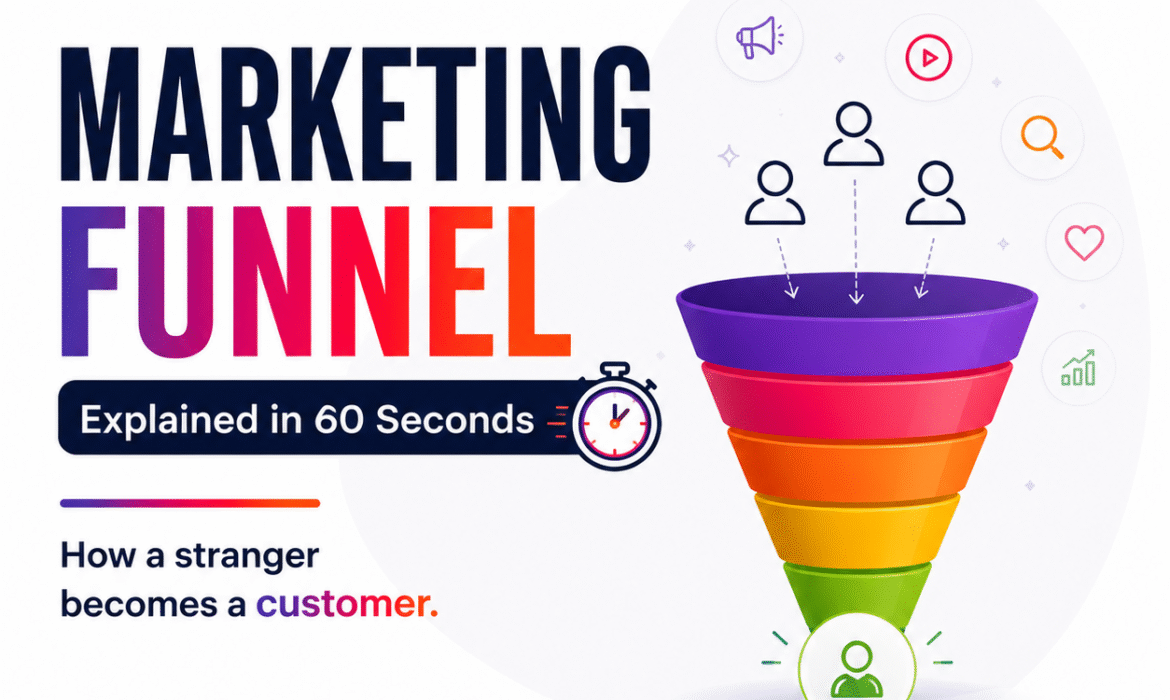
Marketing Funnel Explained: How a Stranger Becomes a Customer
Marketing Funnel Explained: A Complete Guide to Turning Strangers Into Customers
Every customer journey starts somewhere.
Someone discovers your brand on Instagram.
Someone searches for your service on Google.
Someone sees your advertisement.
Someone hears about your business from a friend.
But seeing your brand doesn’t automatically mean becoming a customer.
There is a journey between “I don’t know this business” and “I’m ready to buy from them.”
This journey is what we call the Marketing Funnel.
A marketing funnel helps businesses understand how people move from discovering a brand to becoming customers — and eventually, loyal customers.
In simple terms:
Awareness → Interest → Consideration → Conversion → Retention
Understanding this process can help businesses create better content, better campaigns and better customer experiences.
What Is a Marketing Funnel?
A marketing funnel is a framework that represents the different stages a potential customer goes through before and after making a purchase.
At the top of the funnel, you have a large audience who may not know your business yet.
As people move through the funnel, some become interested, some compare your business with competitors, and eventually a smaller percentage become customers.
After conversion, the goal is to retain those customers and encourage repeat business.
Think of it like this:
A stranger discovers your brand.
↓
They become interested.
↓
They consider your offer.
↓
They make a purchase.
↓
They become a repeat customer.
This is why the marketing funnel is important.
Marketing isn’t just about getting attention. It’s about moving attention toward action.
Why Is a Marketing Funnel Important?
Many businesses make the mistake of treating every person as if they are ready to buy.
But customers aren’t always ready to purchase the first time they see your brand.
Imagine someone sees your Instagram advertisement for the first time.
They may think:
“Interesting.”
But that doesn’t mean:
“I want to buy this right now.”
They may need to:
- Learn more about your business
- Understand the product or service
- Compare alternatives
- Read reviews
- Check pricing
- Visit your website
- Build trust
- Talk to someone from your business
A marketing funnel helps businesses create content and campaigns for each stage of this journey.
The 5 Stages of a Marketing Funnel
1. Awareness — Get Attention
This is the top of the funnel.
At this stage, the customer may not even know your brand exists.
Your primary goal is:
Get Attention.
Businesses can create awareness through:
- YouTube
- Google Search
- Google Ads
- SEO
- Reels
- Influencer marketing
- Blogs
- Educational content
- Paid advertising
For example, someone scrolling Instagram may see a Reel about a problem your business solves.
They weren’t looking for your company.
But now they know you exist.
That’s awareness.
Marketing question:
“How do we get the right people to notice us?”
2. Interest — Build Curiosity
Once someone knows about your brand, the next step is generating interest.
The customer starts asking:
“Is this useful for me?”
At this stage, your content should provide value and answer questions.
You can use:
- Educational posts
- Reels
- Guides
- Blog articles
- Case studies
- Product demonstrations
- FAQs
- Explainer videos
For example, a digital marketing agency could create content explaining:
“5 Reasons Your Google Ads Aren’t Generating Leads.”
Someone facing this problem may stop scrolling and read the content.
They are no longer just aware of the agency.
They’re interested in the solution.
3. Consideration — Build Trust
This is where customers start comparing options.
They may ask:
“Why should I choose you?”
At this stage, your brand needs to provide evidence.
Customers may look at:
- Google reviews
- Testimonials
- Case studies
- Portfolio
- Website
- Pricing
- Results
- Client experience
- Social media presence
- Competitors
This is why online reputation and trust signals are so important.
A customer might discover your business through an advertisement, but before contacting you, they may search your name on Google.
If they find a professional website, positive reviews, useful content and strong social proof, their confidence can increase.
Marketing question:
“Why should the customer trust us?”
4. Conversion — Get the Customer
Now comes the stage businesses usually focus on the most:
Conversion.
The customer is ready to take action.
That action could be:
- Purchase a product
- Book an appointment
- Call the business
- Send a WhatsApp message
- Fill out a lead form
- Request a quotation
- Schedule a consultation
- Sign up for a service
At this stage, your Call to Action (CTA) becomes extremely important.
Instead of making the customer wonder what to do next, clearly guide them.
Examples:
Book Your Consultation
Get a Free Quote
Talk to Our Expert
Shop Now
Send Us a WhatsApp Message
The easier you make the next step, the smoother the conversion journey can become.
5. Retention — Turn Customers Into Repeat Customers
The funnel doesn’t end after the first purchase.
In fact, that’s where another important opportunity begins.
A happy customer can:
- Buy again
- Upgrade
- Recommend your business
- Leave a positive review
- Follow your social media
- Become a loyal customer
- Refer friends and family
This is called customer retention.
Businesses can encourage retention through:
- Follow-up messages
- Email marketing
- WhatsApp marketing
- Loyalty programs
- Special offers
- Customer support
- Personalized communication
- New product announcements
- Educational content
The goal is to move from:
One-time customer → Repeat customer → Loyal customer → Brand advocate
Marketing Funnel Example
Let’s take a simple example of a local salon.
Awareness
A potential customer sees an Instagram Reel:
“5 Haircare Mistakes That Damage Your Hair.”
They discover the salon.
Interest
They visit the salon’s Instagram profile and see haircare tips, services and before-and-after content.
Now they’re interested.
Consideration
They check:
- Google reviews
- Service prices
- Photos
- Location
- Customer feedback
They’re comparing the salon with alternatives.
Conversion
They click:
“Book Appointment.”
The customer becomes a paying customer.
Retention
After the appointment, the salon follows up, shares maintenance tips and reminds the customer about their next appointment.
The customer returns.
That’s the marketing funnel in action.
The Role of Digital Marketing in the Funnel
Different digital marketing channels can support different stages of the customer journey.
Social Media Marketing
Helps businesses build awareness, engagement and brand personality.
SEO
Helps potential customers discover your business when they actively search for information or solutions.
Google Ads
Can place your business in front of people with high purchase intent.
Performance Marketing
Allows businesses to reach targeted audiences and optimise campaigns based on measurable results.
Content Marketing
Educates customers and helps build authority and trust.
Website
Acts as an important destination where customers can learn about your business, evaluate your offer and take action.
Lead Generation
Helps businesses turn interest into qualified enquiries.
A strong marketing strategy doesn’t necessarily depend on one channel.
It connects multiple channels across the customer journey.
Why Businesses Lose Customers in the Funnel
A business may get thousands of impressions but very few customers.
Why?
Because there may be a problem somewhere in the funnel.
For example:
High Awareness + Low Interest
Your content gets views but doesn’t communicate a useful message.
High Interest + Low Consideration
People are interested but don’t find enough information or trust signals.
High Consideration + Low Conversion
Customers like your business but the CTA, offer or buying process isn’t strong enough.
High Conversion + Low Retention
People buy once but don’t have a reason to return.
This is why businesses shouldn’t only look at reach or followers.
They need to understand what happens at every stage.
How to Build a Better Marketing Funnel
A strong funnel starts with understanding your customer.
Ask:
1. Who is my target audience?
Understand their needs, problems, interests and buying behaviour.
2. What problem am I solving?
Your marketing should communicate the problem and the solution clearly.
3. Where does my audience spend time?
Choose platforms where your potential customers are actually active.
4. What content does each stage need?
Don’t show the same message to someone discovering your brand and someone ready to buy.
5. What builds trust?
Use reviews, testimonials, case studies, results and transparent information.
6. What is the next action?
Every stage should guide customers toward the next logical step.
The Biggest Marketing Funnel Mistake
One of the biggest mistakes businesses make is trying to sell too early.
Imagine meeting someone for the first time and immediately asking them to buy from you.
It doesn’t always work.
Customers often need time to:
Discover → Understand → Trust → Decide
That’s why educational and valuable content is important.
Your first interaction doesn’t always need to generate a sale.
Sometimes its job is simply to create awareness.
The next interaction can create interest.
The next can build trust.
And eventually, the customer may be ready to convert.
Marketing Funnel vs Sales Funnel
These terms are often used together, but there is a slight difference.
A marketing funnel generally focuses on attracting people, creating awareness, generating interest and nurturing potential customers.
A sales funnel focuses more specifically on moving qualified prospects toward a purchase.
In modern digital marketing, however, the two often overlap.
A successful customer journey requires both marketing and sales to work together.
How ASI Solutions Can Help Businesses Build Their Funnel
At ASI Solutions, we understand that digital marketing isn’t simply about getting likes or views.
The bigger objective is:
Turn attention into meaningful business results.
Our services can support different stages of the marketing funnel:
📱 Social Media Marketing
Build awareness and engage your target audience.
🎯 Performance Marketing
Reach the right people and drive measurable results.
🔎 SEO & Google Ads
Increase visibility and capture high-intent searches.
👥 Lead Generation
Turn interest into qualified business enquiries.
🌐 Website Designing
Create a professional online presence designed to support conversions.
💡 Branding & Strategy
Build a consistent brand identity and long-term marketing direction.
The goal is not simply to bring more people into the funnel.
The goal is to move the right people through it.
A stranger doesn’t usually become a customer in one step.
They discover you.
They become interested.
They evaluate you.
They build trust.
They take action.
And if you deliver a great experience, they come back.
That’s the power of a marketing funnel.
Awareness → Interest → Consideration → Conversion → Retention
So don’t just ask:
“How many people saw my ad?”
Ask:
“What happens after they see it?”
Because the real goal of marketing isn’t just to get attention.
It’s to turn attention into customers — and customers into long-term relationships
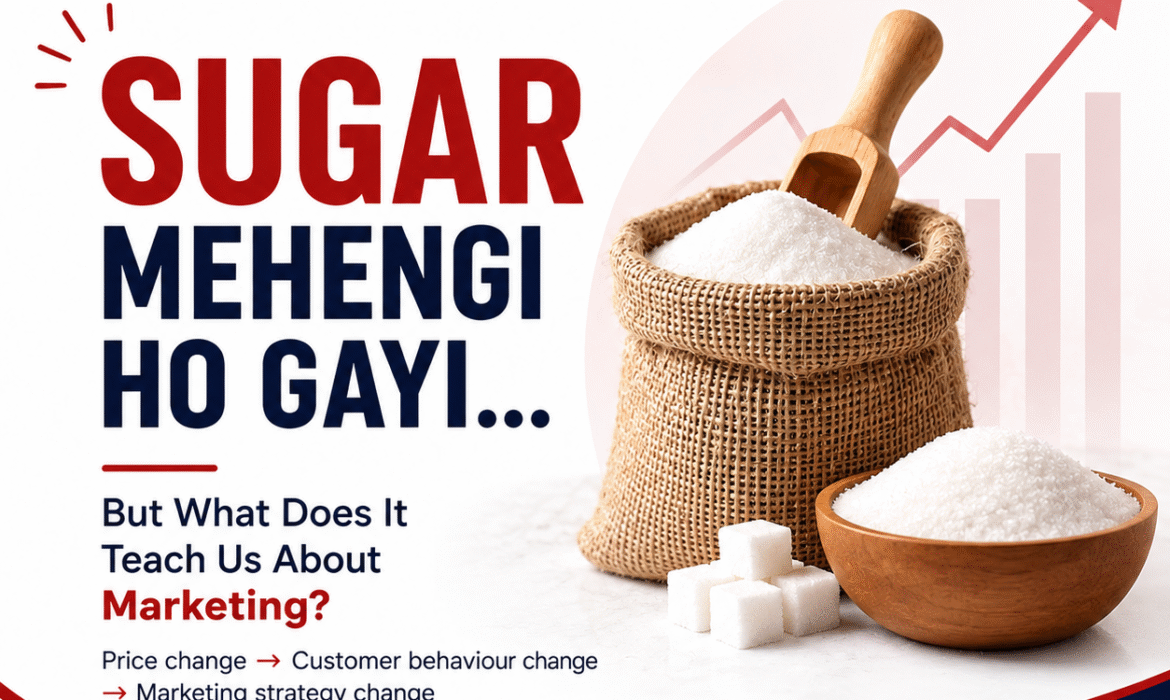
Sugar Mehengi Ho Gayi… But What Does It Teach Us About Marketing?
Sugar Price Hike in India: What Rising Sugar Prices Teach Us About Marketing Strategy
Sugar is one of those everyday products that most consumers don’t think twice about—until its price starts rising.
In recent weeks, sugar prices in India have increased significantly. According to the Government of India’s data, the retail price moved from ₹48.18 per kg on July 20, 2026, to ₹55.70 per kg on August 20, 2026, an increase of around 15.6% in one month.
The government has linked the recent increase to several factors, including lower-than-expected domestic production, higher demand ahead of the festive season, weather-related damage to sugarcane crops, tighter global sugar supplies, and speculation or hoarding in parts of the market.
But there’s an important lesson here that goes beyond sugar.
When Prices Change, Customer Behaviour Changes Too
A price increase doesn’t simply affect a company’s revenue or costs.
It can change how customers think, compare and purchase.
When a product becomes more expensive, consumers may start asking:
- Is it still worth the price?
- Can I find a cheaper alternative?
- Is the quality better than competitors?
- Should I buy less?
- Can I postpone the purchase?
- Am I getting enough value for what I’m paying?
This is where marketing strategy becomes increasingly important.
The basic relationship is:
Price Change → Customer Behaviour Change → Marketing Strategy Change
A business that ignores the first two stages can struggle at the third.
Why Has Sugar Become More Expensive?
The recent sugar price increase has been influenced by multiple supply-and-demand factors.
The government says the current rise reflects lower-than-expected sugar production, festive-season demand, weather-related crop damage, tightening global supplies and speculation/hoarding.
Sugar production for the current season is expected to be around 306 lakh metric tonnes, compared with an initial estimate of approximately 343 lakh metric tonnes. The government has also pointed to crop issues including Red Rot, Top Borer disease and waterlogging.
At the same time, demand traditionally increases during the festive period, when sugar is widely used in sweets and other food products.
To improve availability and contain prices, the government permitted 10 lakh metric tonnes (1 million tonnes) of raw sugar imports duty-free and introduced measures to limit excessive stockholding.
But What Does This Have to Do With Marketing?
Everything.
Marketing isn’t only about advertisements.
Marketing is about understanding how people respond to changes in the market.
When prices change, customer expectations can change too.
For example, imagine a brand that previously sold a product for ₹500 and now needs to charge ₹600 because its input costs have increased.
Simply announcing:
“Our price has increased.”
doesn’t communicate enough value.
The customer immediately sees the ₹100 increase.
A smarter marketing approach communicates what the customer is getting in return.
That could be:
- Better quality
- Better service
- Improved features
- Longer-lasting value
- Faster delivery
- Better customer support
- More convenience
- Stronger results
The goal isn’t to hide the price increase.
The goal is to make the value clear.
Price Sensitivity: Why Customers Start Comparing More
When prices rise, customers tend to become more conscious of what they are spending.
This can increase price sensitivity.
A customer who previously purchased without much thought may suddenly compare:
Brand A vs Brand B
Price A vs Price B
Features A vs Features B
Value A vs Value B
This creates both a challenge and an opportunity for businesses.
If your brand competes only on price, a competitor can potentially attract your customer by offering something cheaper.
But if your brand competes on value, the conversation becomes different.
Instead of:
“We’re cheaper.”
you can communicate:
“Here’s why we’re worth it.”
That’s a much stronger long-term positioning strategy.
Don’t Just Sell the Product. Communicate the Value.
One of the biggest mistakes businesses make during price changes is focusing entirely on the increase.
For example:
“Prices increased by 10%.”
That’s information.
But marketing needs to answer another question:
“Why should the customer continue choosing you?”
A better communication strategy could focus on:
Quality + Benefits + Experience + Trust + Value
The customer should understand what makes the product or service worth paying for.
This is particularly important in competitive industries where customers have multiple alternatives.
What Happens When Businesses Ignore Customer Psychology?
Imagine a business increases its price but doesn’t change its communication.
Customers may perceive:
Higher Price → Lower Value → Less Interest
But with better positioning, the same situation can become:
Higher Price → Clearer Value → Stronger Perceived Benefit
This doesn’t mean customers will automatically accept every price increase.
Instead, it means businesses are giving customers a reason to understand and evaluate the price beyond the number itself.
The Marketing Funnel Also Changes
A change in price can affect every stage of the customer journey.
Awareness
Customers become more conscious of your brand and its pricing.
Interest
They begin asking whether your product is relevant and affordable.
Consideration
They compare you with competitors.
Conversion
The final purchase decision becomes more value-sensitive.
Retention
After buying, customers decide whether the experience justified the price.
That’s why pricing decisions shouldn’t be isolated from marketing.
Pricing, positioning, communication and customer experience need to work together.
What Can Businesses Learn From the Sugar Price Hike?
The sugar market gives us a simple but powerful business lesson:
You cannot always control market conditions. But you can control how your brand responds to them.
Raw material costs may increase.
Competition may change.
Consumer behaviour may shift.
Demand may rise or fall.
Economic conditions may create uncertainty.
But businesses can still control:
- Their messaging
- Their positioning
- Their customer communication
- Their digital presence
- Their advertising strategy
- Their customer experience
- Their value proposition
This is where strategic marketing becomes a competitive advantage.
How Digital Marketing Can Help During Price Changes
When customers become more price-conscious, businesses need to become more strategic about how they reach and communicate with them.
📱 Social Media Marketing
Use content to explain your value, educate customers and strengthen brand trust instead of relying only on promotional posts.
🎯 Performance Marketing
Target audiences more precisely and optimise campaigns around meaningful business outcomes.
🔎 SEO & Google Ads
Capture customers who are actively searching for solutions and comparing available options.
👥 Lead Generation
Create opportunities to engage potential customers and communicate your value proposition directly.
🌐 Website Designing
Your website should clearly explain your products, benefits, pricing and reasons to choose your brand.
💡 Branding & Strategy
Strong positioning helps customers understand why your business deserves consideration—even when you’re not the cheapest option.
Don’t Compete Only on Price
This is perhaps the biggest lesson businesses can take from the current sugar price situation.
Price is one part of the buying decision.
Value is much bigger.
A brand that constantly tries to win by being the cheapest can find itself trapped in a price war.
Instead, businesses should ask:
What makes us valuable?
Why should customers choose us?
What problem are we solving?
What experience are we providing?
How can we communicate that better than our competitors?
These questions create stronger marketing strategies.
The Bigger Lesson: Analyse → Adapt → Communicate → Convert
Market changes should trigger a strategic response.
1. Analyse
Understand what has changed and why.
2. Adapt
Review your pricing, offer, positioning and marketing approach.
3. Communicate
Explain your value clearly to your customers.
4. Convert
Turn that understanding into enquiries, purchases and long-term relationships.
This process applies far beyond the sugar industry.
It works for FMCG brands, e-commerce businesses, restaurants, service companies, B2B businesses and local businesses.
Sugar may be getting more expensive, but the bigger story is about how markets influence customer psychology.
A price change can change how customers perceive value.
And when customer behaviour changes, marketing must change with it.
Businesses shouldn’t simply react by saying:
“Our costs have increased.”
They should ask:
“How can we communicate our value better?”
Because markets will continue to change.
Prices will continue to move.
Customer expectations will continue to evolve.
The businesses that adapt their marketing strategy accordingly will be better positioned to compete.
**Price Changes Are Beyond Your Control.
Your Response Isn’t.**
At ASI Solutions, we help businesses turn changing market conditions into smarter marketing opportunities through Social Media Marketing, Performance Marketing, SEO, Google Ads, Lead Generation, Website Designing and Branding Strategy.
Analyse. Adapt. Communicate. Convert.
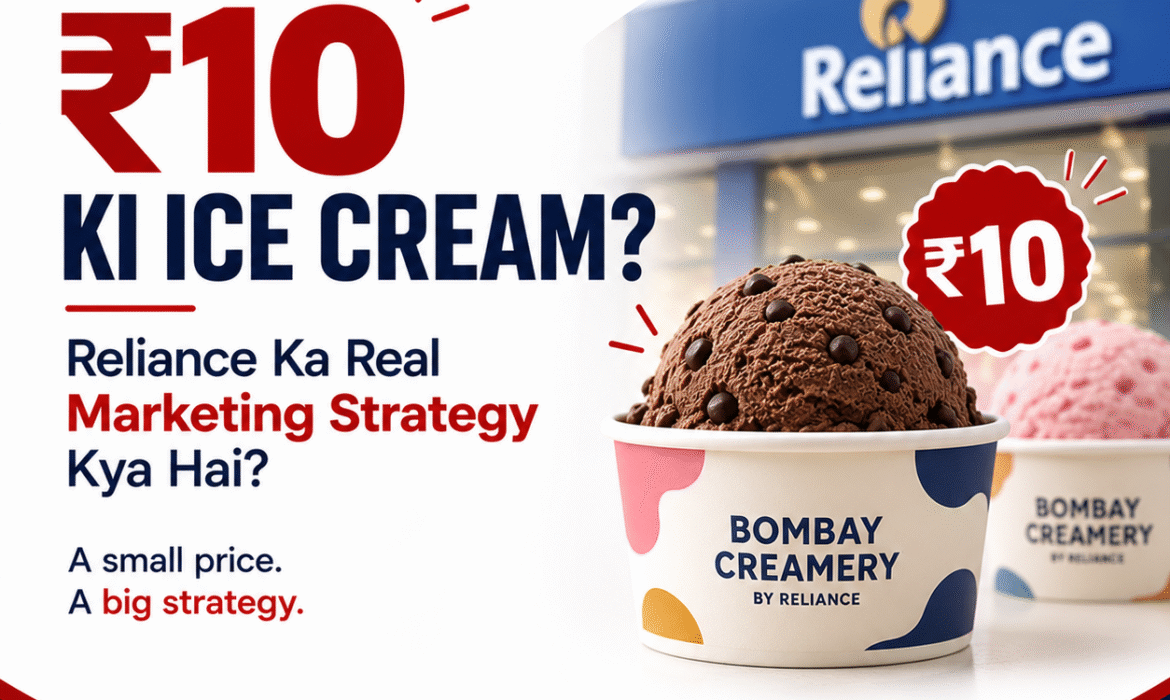
Reliance’s ₹10 Ice Cream Strategy: What Bombay Creamery Teaches Us About Marketing
₹10 Ki Ice Cream? The Marketing Strategy Behind Reliance’s Bombay Creamery
Reliance has entered India’s competitive ice-cream market with Bombay Creamery, a new dairy ice-cream brand from Reliance Consumer Products Limited (RCPL). The interesting part isn’t only the product itself — it’s the pricing, positioning, distribution and customer-acquisition strategy behind the launch.
With prices starting at ₹10, Bombay Creamery is initially being rolled out across Western India, with a wider nationwide expansion planned. The product range includes cones, cups, tubs, bars and sticks, while RCPL says the ice cream is made with real dairy cream.
But why ₹10?
Because sometimes, pricing isn’t just about revenue — it can also be about marketing.
Why Is Reliance Launching Ice Cream at ₹10?
India already has established ice-cream players such as Amul, Vadilal, Mother Dairy and Kwality Wall’s. Entering such a competitive category requires more than simply launching another product.
A low entry price can reduce the hesitation associated with trying a new brand.
Think about the customer’s mindset:
“₹10 mein try karne mein kya hai?”
That small psychological shift can make a significant difference.
Instead of asking whether an unfamiliar brand is worth spending ₹50, ₹100 or more on, a customer can try the product with very little perceived financial risk.
This creates a simple marketing funnel:
Low Price → Easy Trial → Customer Experience → Brand Awareness → Repeat Purchase
The ₹10 price point therefore has the potential to function as a customer acquisition strategy, not simply a pricing decision.
The Psychology Behind Low-Cost Entry Pricing
When customers don’t know a brand, uncertainty becomes a barrier.
They may wonder:
- Is the product actually good?
- Will I like the taste?
- Is the quality worth the price?
- Why should I choose this brand instead of an established competitor?
A low introductory price can reduce that barrier.
The customer doesn’t necessarily need to be convinced through a long advertisement. The product itself becomes easier to experience.
And once the customer has tried it, the brand has something much more valuable:
A chance to build a relationship.
Of course, low pricing alone doesn’t guarantee repeat purchases. The product still needs to deliver on taste, quality, availability and overall customer experience.
That’s where the bigger strategy comes in.
Reliance’s Bigger Ice-Cream Strategy
The ₹10 price is only one part of the picture.
RCPL is positioning Bombay Creamery as an accessible premium dairy brand, combining affordability with a focus on real dairy ingredients. The brand is also backed by Reliance’s retail and distribution capabilities.
This creates several important strategic advantages.
1. Attention
A ₹10 starting price immediately gives consumers a reason to notice the brand.
In a crowded market, attention is the first battle.
2. Trial
A low price can make the first purchase easier.
The objective is to move the consumer from:
“I’ve heard about it.”
to:
“I’ve tried it.”
3. Distribution
A product cannot grow if customers cannot find it.
Reliance’s existing distribution and retail infrastructure could help Bombay Creamery reach consumers across multiple locations and formats.
4. Brand Awareness
Every purchase, recommendation, social-media conversation and retail interaction creates another opportunity for consumers to remember the brand.
5. Repeat Purchase
This is where the real test begins.
Getting someone to try an ice cream for ₹10 is one thing.
Getting that person to choose the brand again is much more valuable.
₹10 Is the Hook — Not the Entire Strategy
One of the biggest marketing lessons from Bombay Creamery is that price can attract customers, but price alone cannot build a strong brand.
Imagine two businesses.
Business A says:
“We’re cheaper.”
Business B says:
“We’re affordable, valuable, reliable and worth coming back to.”
The second proposition is much stronger in the long term.
For Bombay Creamery, the challenge will therefore go beyond attracting first-time buyers.
The brand will need to build:
- Product satisfaction
- Brand trust
- Availability
- Customer recall
- Consistent quality
- Repeat purchase behaviour
That’s how a pricing strategy can potentially evolve into a brand-building strategy.
The Marketing Funnel Behind the ₹10 Strategy
This launch also demonstrates how different parts of marketing can work together.
Awareness
The ₹10 price creates curiosity.
Interest
Consumers want to know what the new brand offers.
Trial
The affordable price reduces hesitation.
Experience
The consumer evaluates taste and quality.
Repeat Purchase
A positive experience can encourage another purchase.
Loyalty
Consistent value can eventually turn customers into repeat buyers and brand advocates.
So the real journey isn’t:
₹10 → Sale
It’s:
₹10 → Trial → Experience → Trust → Repeat → Loyalty
What Can Other Businesses Learn From This?
The lesson isn’t that every business should reduce its price to ₹10.
That’s the wrong takeaway.
The real lesson is:
Find your customer’s entry barrier — and make it easier to take the first step.
For one business, that could mean an affordable introductory product.
For another, it could be:
- A free consultation
- A trial service
- A limited-time offer
- A free demo
- An introductory package
- A useful free resource
- A first-purchase incentive
The strategy should depend on the business, audience and customer journey.
Great Offers Need Great Marketing
Even the best offer can get lost if people don’t know about it.
This is where digital marketing becomes important.
A business needs to answer:
Who is the right audience?
Where can we reach them?
What message will get their attention?
How do we convert that attention into leads or sales?
How do we bring customers back?
This requires an integrated approach.
At ASI Solutions, businesses can build that journey through:
📱 Social Media Marketing
Create awareness, engagement and consistent brand visibility.
🎯 Performance Marketing
Reach the right audience and optimise campaigns around measurable business results.
🔎 SEO & Google Ads
Increase online visibility and capture customers actively searching for products or services.
👥 Lead Generation
Turn interest into qualified business opportunities.
🌐 Website Designing
Create a digital presence that builds credibility and supports conversions.
💡 Branding & Marketing Strategy
Build a consistent brand message and create a long-term growth strategy.
The Real Marketing Lesson From Bombay Creamery
Reliance’s Bombay Creamery launch is a useful example of how pricing, psychology, distribution and marketing can work together.
The ₹10 starting price may attract the first interaction.
But the bigger opportunity is what happens after that interaction.
Attention creates awareness.
Affordable pricing encourages trial.
Good products create satisfaction.
Strong marketing builds recall.
Consistency creates repeat customers.
And ultimately:
Great Products Get Attention. Great Marketing Turns Attention Into Customers.
The biggest takeaway for businesses isn’t to copy Reliance’s ₹10 strategy.
It’s to understand the thinking behind it:
Make the first step easier. Create value. Build trust. And give customers a reason to come back.
That’s where smart marketing turns an offer into sustainable growth.
Best Time to Post on Instagram, LinkedIn, YouTube & Facebook in 2026
Creating great content is only half the battle.
The other half is ensuring your audience actually sees it.
Many businesses invest significant time and effort into creating content but overlook one critical factor: timing.
Posting at the right time can increase reach, engagement, clicks, and overall content performance.
While there is no universal posting time that works for every business, industry data and user behavior trends can help identify the most effective time windows for each platform.
Let’s explore the best times to post on Instagram, LinkedIn, YouTube, and Facebook in 2026.
Why Posting Time Matters
Social media algorithms prioritize content that receives engagement quickly after publishing.
When your audience is online and active, your content is more likely to receive:
✅ Likes
✅ Comments
✅ Shares
✅ Saves
✅ Clicks
These engagement signals help platforms distribute your content to a wider audience.
This is why posting at the right time can significantly improve content performance.
Best Time to Post on Instagram
Instagram remains one of the most powerful platforms for content creators and businesses.
Best Posting Times
⏰ 9:00 AM – 11:00 AM
⏰ 6:00 PM – 9:00 PM
Best Days
📅 Tuesday
📅 Wednesday
📅 Thursday
Why These Times Work
Morning users often check Instagram before starting their day.
Evening hours tend to generate strong engagement because users are relaxing and consuming content after work.
Pro Tip
Reels often perform exceptionally well during evening hours when users spend more time browsing content.
Best Time to Post on LinkedIn
LinkedIn is a professional networking platform, which means audience behavior differs from other social channels.
Best Posting Times
⏰ 8:00 AM – 10:00 AM
⏰ 12:00 PM – 1:00 PM
Best Days
📅 Tuesday
📅 Wednesday
📅 Thursday
Why These Times Work
Professionals often check LinkedIn before work begins or during lunch breaks.
Posting during these periods increases visibility among working professionals and decision-makers.
Pro Tip
Educational content, industry insights, and thought leadership posts perform particularly well during business hours.
Best Time to Post on YouTube
YouTube content consumption patterns differ from other social platforms.
Viewers often watch videos during leisure hours.
Best Posting Times
⏰ 5:00 PM – 8:00 PM
Weekend Posting Times
⏰ 10:00 AM – 1:00 PM
Why These Times Work
Users typically watch YouTube after work or school when they have more available time.
Weekend mornings and afternoons also generate strong viewing activity.
Pro Tip
Upload videos a few hours before peak viewing times to allow YouTube’s algorithm time to index and distribute your content.
Best Time to Post on Facebook
Facebook continues to be an important platform for businesses, local brands, and community engagement.
Best Posting Times
⏰ 9:00 AM – 11:00 AM
⏰ 1:00 PM – 3:00 PM
Why These Times Work
Many users check Facebook during work breaks and early afternoon browsing sessions.
These time slots often generate higher engagement and interaction.
Pro Tip
Posts with visuals, videos, and community-focused content tend to perform better during peak activity periods.
The Most Important Rule
While recommended posting times provide a useful starting point, there is one rule every marketer should remember:
The Best Time to Post Is When Your Audience Is Online.
Every business serves a unique audience.
Your followers may have different habits based on:
- Industry
- Location
- Age group
- Profession
- Interests
This is why platform insights are essential.
Use Instagram Insights, LinkedIn Analytics, YouTube Studio, and Facebook Insights to identify when your audience is most active.
How to Find Your Best Posting Time
Step 1: Analyze Existing Content
Review your top-performing posts.
Identify patterns in posting times and engagement.
Step 2: Test Different Time Slots
Experiment with multiple posting schedules over several weeks.
Step 3: Measure Performance
Track:
- Reach
- Engagement Rate
- Clicks
- Watch Time
- Shares
Step 4: Optimize
Double down on the posting times that consistently deliver better results.
Consistency Matters More Than Timing
Many marketers spend too much time searching for the perfect posting time.
While timing is important, consistency remains the biggest factor in long-term growth.
A consistent posting schedule helps:
✔ Build audience trust
✔ Improve algorithm signals
✔ Increase brand awareness
✔ Generate more engagement
✔ Support long-term growth
Great content posted consistently will almost always outperform average content posted at the perfect time.
Posting at the right time can help maximize the performance of your content across Instagram, LinkedIn, YouTube, and Facebook.
However, timing should be viewed as an optimization strategy rather than a replacement for quality content.
The formula for success remains simple:
Great Content + Consistency + Smart Timing = Better Results
Use the recommended posting times as a starting point, monitor your analytics, and refine your strategy based on your audience’s behavior.
Because in social media marketing, the goal isn’t just to post content.
The goal is to post content when people are most likely to see it.
Conclusion
Understanding the best time to post on social media can significantly improve reach and engagement. Whether you’re using Instagram, LinkedIn, YouTube, or Facebook, combining quality content with strategic timing can help your brand grow faster and connect with the right audience.
Meta’s Direction for 2026: AI, Original Content, and Reels
The digital marketing landscape is evolving rapidly, and Meta continues to play a major role in shaping how businesses connect with customers online.
From AI-powered automation to the growing importance of Reels and original content, Meta’s latest updates send a clear message:
The future belongs to businesses that adapt quickly.
For marketers, entrepreneurs, and business owners, understanding these changes is no longer optional—it’s essential for staying competitive.
Why Meta Updates Matter
Facebook and Instagram remain two of the world’s most powerful marketing platforms.
Millions of businesses rely on Meta’s ecosystem to:
- Generate leads
- Build brand awareness
- Drive website traffic
- Increase sales
- Engage customers
As Meta introduces new features and algorithm updates, businesses that adapt early often gain a significant advantage.
The latest updates reveal three major priorities:
✅ Artificial Intelligence
✅ Original Content
✅ Short-Form Video (Reels)
AI Is Becoming the Foundation of Marketing
Artificial Intelligence is no longer just a trend.
It is becoming a core part of Meta’s business ecosystem.
Meta is investing heavily in AI-powered tools that help businesses:
- Create content faster
- Automate customer interactions
- Improve campaign performance
- Optimize advertising strategies
- Analyze audience behavior
These tools are helping marketers save time while making smarter decisions.
However, AI should be viewed as an assistant rather than a replacement.
Technology can improve efficiency, but strategy, creativity, and customer understanding still require a human touch.
Original Content Is More Valuable Than Ever
One of the most important shifts in Meta’s ecosystem is the increasing preference for original content.
As more businesses rely on recycled or copied content, Meta’s algorithms continue rewarding creators and brands that produce unique and valuable content.
Original content helps businesses:
- Build authority
- Improve engagement
- Increase reach
- Strengthen brand identity
- Earn audience trust
Brands that consistently share authentic content are more likely to stand out in crowded social feeds.
In a world where AI can generate content instantly, originality becomes a competitive advantage.
Reels Continue to Dominate
Short-form video remains one of the most effective content formats across social media.
Meta continues to prioritize Reels because users increasingly prefer fast, engaging, and visual content.
Businesses using Reels effectively can:
- Reach new audiences
- Increase engagement
- Improve discoverability
- Generate brand awareness
- Drive conversions
Reels offer an opportunity to educate, entertain, and connect with audiences in a highly engaging format.
For many brands, Reels have become one of the most powerful tools for organic growth.
Smarter Marketing Through Better Data
Another major focus for Meta is improving performance measurement.
Modern marketers are moving beyond vanity metrics such as:
- Likes
- Followers
- Impressions
Instead, they are focusing on metrics that directly impact business growth:
- Website clicks
- Leads
- Conversions
- Customer acquisition
- Return on investment (ROI)
Better tracking allows businesses to understand what works and where to invest their marketing budget more effectively.
The future of marketing is not just about generating attention.
It’s about generating measurable results.
The Winning Formula for 2026
When we combine Meta’s latest priorities, a clear growth formula emerges:
AI + Original Content + Reels = Sustainable Growth
Businesses that use AI to improve efficiency, create authentic content, and leverage short-form video will be better positioned for success.
These three elements work together:
- AI improves productivity.
- Original content builds trust.
- Reels increase visibility.
Together, they create a powerful marketing ecosystem.
What Businesses Should Do Next
To stay competitive in 2026, businesses should focus on:
1. Embrace AI Tools
Use AI to automate repetitive tasks and improve productivity.
2. Prioritize Original Content
Share unique insights, experiences, and expertise.
3. Invest in Reels
Create short-form videos that educate, entertain, and engage.
4. Track Meaningful Metrics
Focus on conversions, leads, and business outcomes rather than vanity metrics.
5. Stay Consistent
Consistency remains one of the most important factors in long-term growth.
The Future of Digital Marketing
Meta’s latest updates highlight a broader trend in digital marketing.
Success is no longer about posting more content.
It is about creating smarter content.
Businesses that combine technology, creativity, and consistency will continue to outperform competitors.
The brands that adapt early will gain:
✔ More visibility
✔ Greater trust
✔ Better engagement
✔ Higher conversions
✔ Sustainable growth
Meta’s direction for 2026 is clear.
Artificial Intelligence, Original Content, and Reels are shaping the future of digital marketing.
Businesses that embrace these changes today will be better prepared for tomorrow’s opportunities.
The goal is not simply to keep up with trends.
The goal is to use these trends strategically to build stronger brands and better customer relationships.
Because in the digital age, growth belongs to businesses that evolve.
Conclusion
Meta’s latest updates are not just feature releases—they are signals about where digital marketing is heading.
By combining AI-powered efficiency, authentic content creation, and engaging Reels strategies, businesses can create stronger online visibility, build trust, and achieve long-term growth in 2026 and beyond.

